

If you and your friends have done a European river cruise and want something none of you have tried, a Kontiki Costa Rica cruise belongs on your list. I sailed on the Kontiki Wayra in June, a small yacht that carries no more than 18 passengers along Costa Rica’s Pacific coast, and I had unique experiences each and every day.
We hiked national parks with no one else on the trail, went whitewater rafting, and snorkeled in calm waters filled with fish. Then we came back to the yacht each afternoon for fun in the water with a water slide, stand-up paddleboards, SeaBobs, and more.
It isn’t the right fit for everyone, though, and the small size that made it so special for me is one of the big reasons why. We also got up close and personal with nature in a way that’s more intense than some people enjoy.
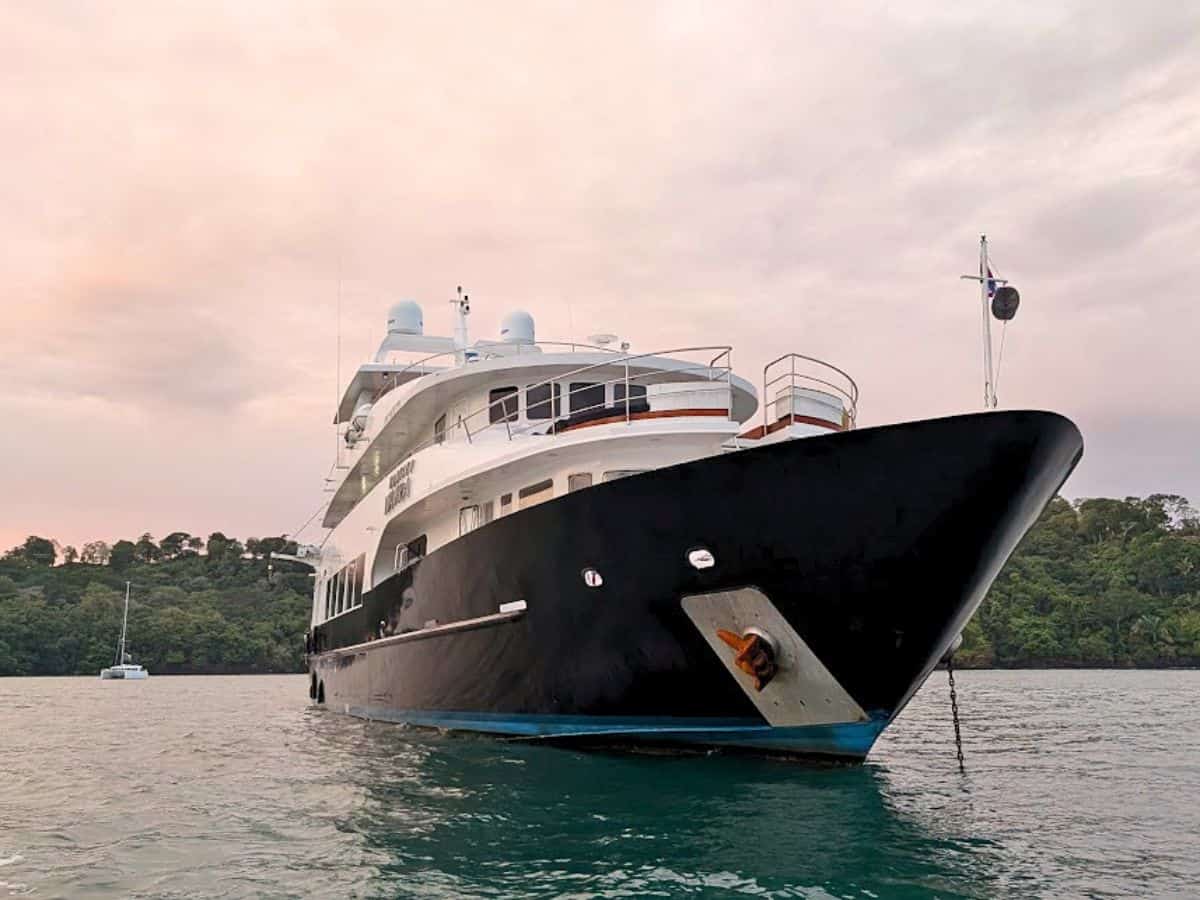
I traveled with media colleagues on this sailing. We received a complimentary sailing as media to cover the ship and itinerary, but all opinions are my own.
Costa Rica as an Alternative to a European River Cruise
European river cruises have had a rough stretch. As much as I adore them, low water on the Rhine and Danube this summer led to ship swaps, bus transfers, and itinerary changes for many passengers.
A small ship cruise in Costa Rica gives you much of what people love about river cruising. You unpack once, you travel with a small group, and the ship takes you to each stop.
The difference is what you do once you get there, since you’re hiking rainforest, rafting, kayaking, and snorkeling instead of walking through old towns. If you’re still figuring out what style of cruise fits you, my breakdown of ocean versus river cruises is a good place to start.
This style of cruising is also still lesser known. Far fewer people have heard of cruising Costa Rica on a yacht, so there’s a good chance you’ll be the first of your friends to do it. Bragging rights included.
Who the Kontiki Costa Rica Cruise Is Right For
This is a fantastic cruise if you want to avoid crowds. With a maximum of 18 passengers, you’re never fighting for a spot on the trail or waiting in a long line to get off the ship.
That size has advantages and disadvantages. If you don’t want to “have” to talk to your fellow cruisers, this might not be for you. Dinner is served at three tables that each seat six people, so you can’t escape your shipmates at meals, and you’re going to get to know them by the end of the week.
Our cruise companions were delightful, and we all got along well. Even for a small ship, there’s enough space to escape if you need some downtime.
Nothing is mandatory. If there’s a day you don’t want to join an activity, you can stay on the ship with the crew. There’s no pressure, and another travel writer in our group did exactly that two different days.
Is the Kontiki Wayra Accessible?
You do need to be mobile to take this cruise, as with pretty much any expedition cruise. There are stairs and narrow areas throughout the yacht, and you can’t bring a mobility device on board.
You don’t need to do every activity, but if you can’t hike on relatively flat ground for an hour or two, you won’t enjoy the cruise. Some stops also have wet landings, where you step off the Zodiac into water that can be up to your knees and walk onto the beach.
Kontiki Costa Rica Cruise Itinerary
Our eight-day sailing started in Golfito and ended in Quepos. Kontiki’s website shows the same route running the other way, so check your departure direction before you book flights.
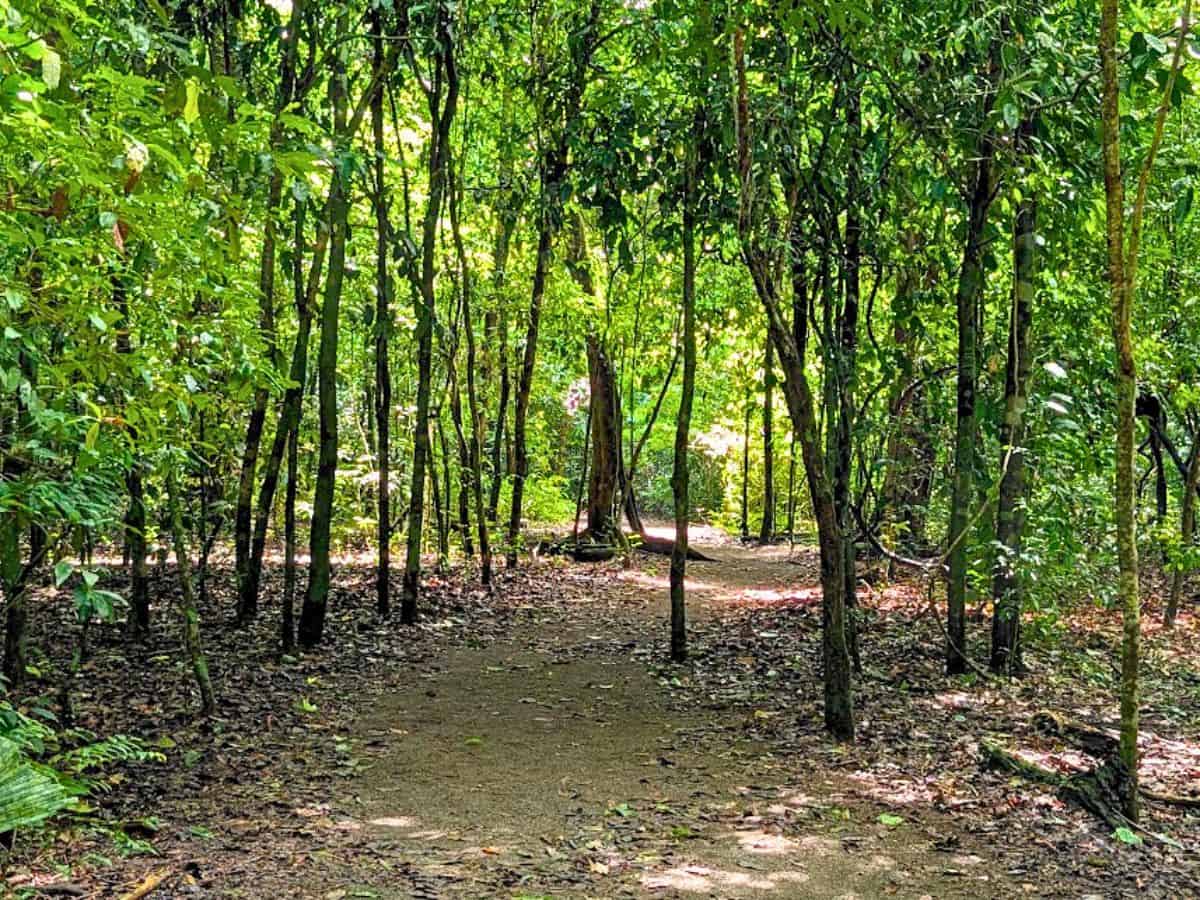
We boarded in Golfito, then spent day two at Los Mogos, snorkeling first and kayaking the Río Esquinas later in the day before anchoring near Bahía Pez Aguja. Day three was the Finca Kobo cacao farm, day four was Isla del Caño, and day five was Corcovado National Park.
On day six, we went whitewater rafting on the Savegre River. Weather kept us from sailing on to Alcatraz Island, so we stayed in Quepos and spent day seven at Manuel Antonio National Park instead. We left from Quepos to head home on day eight.
One of my favorite parts of so many of these days had nothing to do with the stops themselves. Dolphins regularly played in the water behind the Zodiac or the Wayra, and it never got old watching them.
Kontiki Wayra Cabins and How to Choose Yours
The nine cabins on the Kontiki Wayra are all very different, and desirability varies even within the same cabin type. I found the exact sizes by deck so you can pick the one that fits what matters most to you.
Veranda Deck (Upper Deck)
- Cabin 1: 194 square feet (Veranda Luxury Stateroom)
- Cabin 2: 194 square feet (Veranda Luxury Stateroom)
- Cabin 3: 194 square feet (Veranda Luxury Stateroom)
- Cabin 4: 194 square feet (Veranda Luxury Stateroom)
- Cabin 5: 204 square feet (Veranda Luxury Stateroom with a sliding glass door and semi-private outdoor seating area)
Panoramic Deck (Main Deck)
- Cabin 6: 140 square feet (Panoramic Luxury Stateroom)
- Cabin 7: 140 square feet (Panoramic Luxury Stateroom)
- Cabin 8: 204 square feet (Panoramic Luxury Stateroom with a significantly larger layout than the others on this deck)
Interior Deck (Lower Deck)
- Cabin 9: 161 square feet (Porthole Luxury Stateroom, closest to the gym and spa room)
Before you pick a cabin, watch my video that walks through all four decks so you can see the ship’s layout. It’s hard to get a sense of it from words alone.
Cabin 5
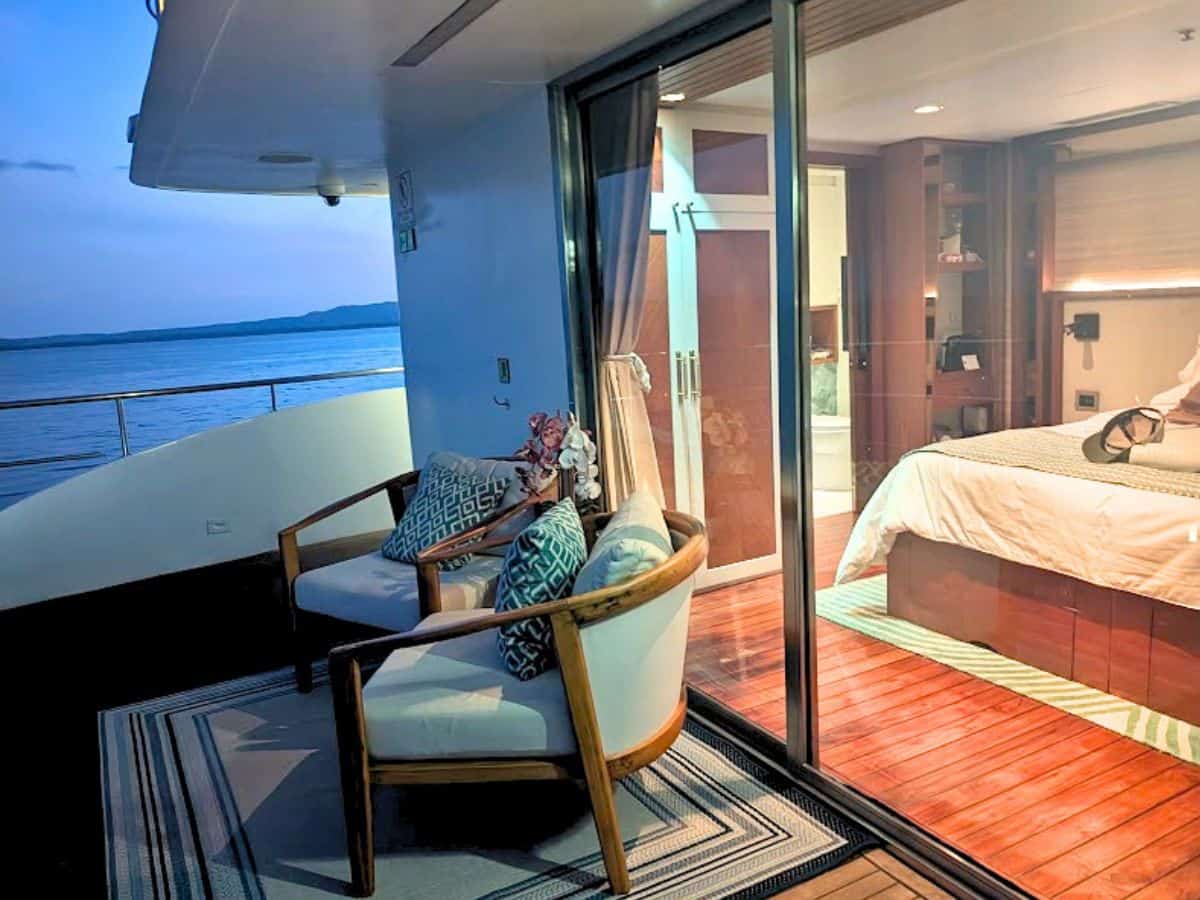
Cabin 5 has the best view on the ship. It’s the only cabin with a sliding glass door, which opens to what’s almost a private sitting area just outside.
This cabin is located on the upper deck, between the main deck where you eat and get your nightly briefing and the top deck with the hot tub and loungers.
Cabins 1, 2, 3, and 4
These four cabins are on the same deck as Cabin 5 and are pretty interchangeable. While Kontiki calls them veranda staterooms, you don’t get a traditional balcony. Instead, you have a floor-to-ceiling window that looks out on the walkway.
That means other passengers can see in if you keep your curtains open. Everyone on our sailing was respectful, and there’s no real reason to wander the ship much, but it’s good to know before you choose.
Cabin 8
Cabin 8 is the largest and nicest cabin on the Panoramic Deck, which is located below cabins 1 through 5. If you want space and don’t need the Veranda Deck, ask for this one.
Cabins 6 and 7
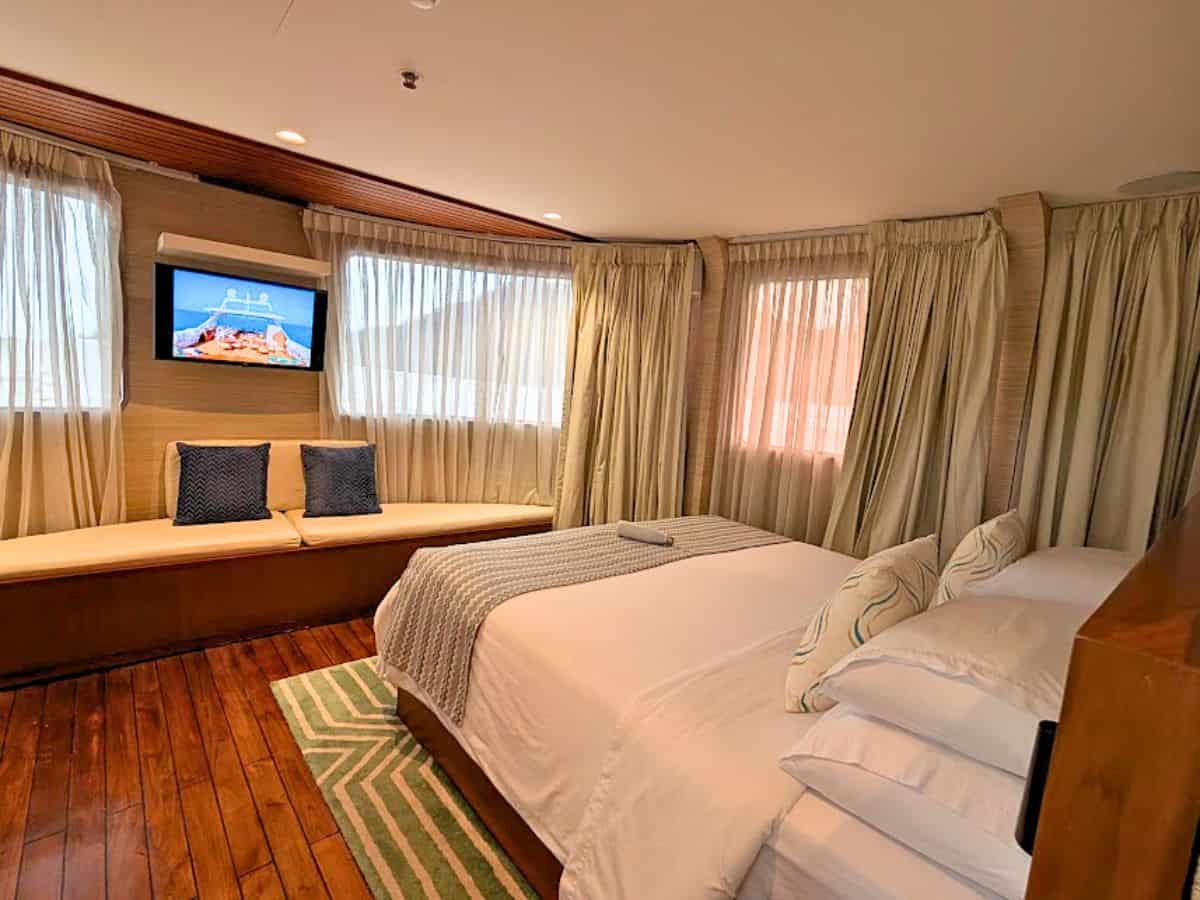
Cabins 6 and 7 are significantly smaller than the others and sit just outside the dining area, so there can be some noise if you’re a light sleeper. The crew closes a door between the dining area and these cabins at night, but it isn’t soundproof.
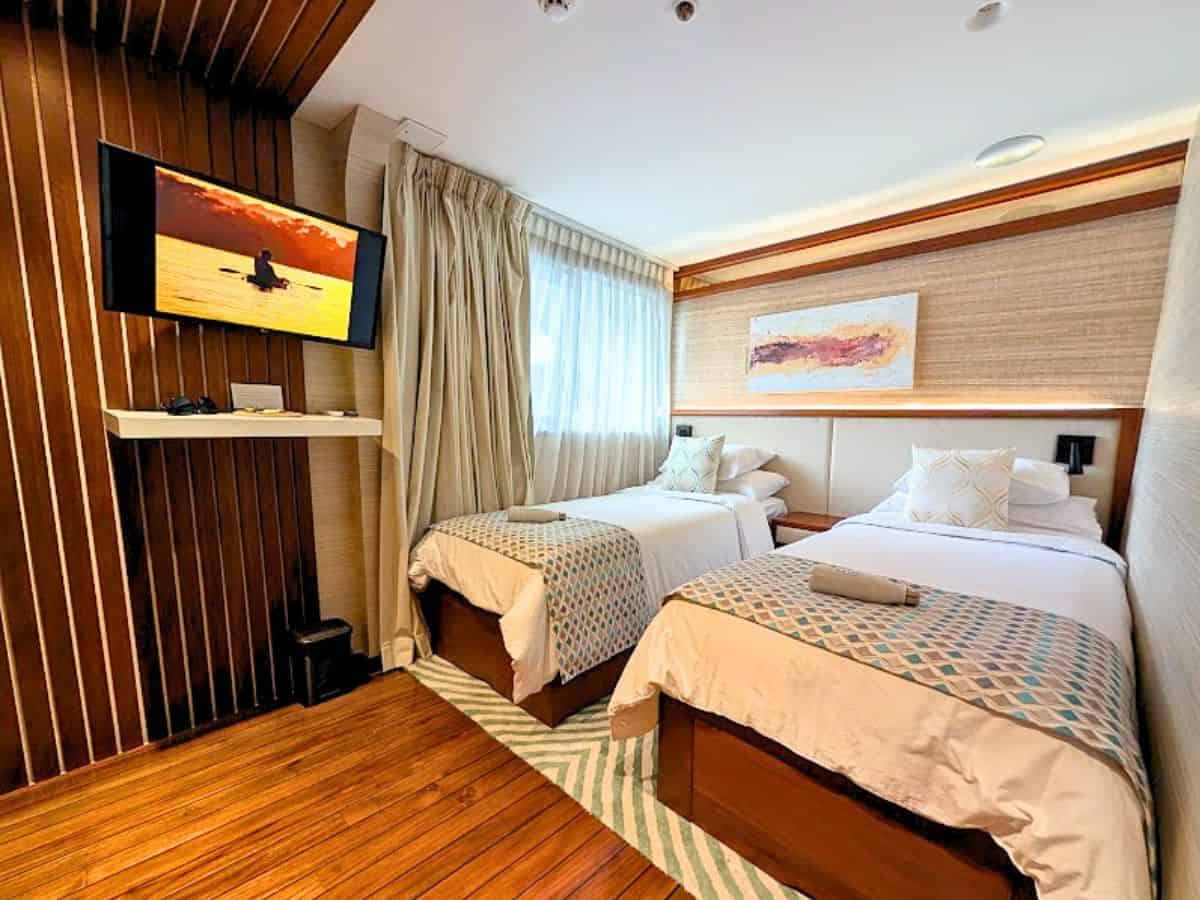
I was in cabin 6 with a media colleague. It was small but functional, and they made the most of the space, but with two friends sharing, it was definitely tight.
A couple who can have the beds pushed together probably wouldn’t feel it as much. If you’re traveling with a friend, keep that in mind as you compare cabins.
The noise didn’t bother me because I sleep with a Manta Sleep mask. It blocks out ambient light and has built-in Bluetooth speakers, so I fall asleep listening to soft music or old-time radio no matter what’s happening outside my door.
Want to see exactly what you get? Check out my cabin tour video.
Cabin 9
Cabin 9 is on the lowest deck, near the gym and spa room. It’s larger than cabins 6 and 7, but with a porthole instead of a full window, it isn’t quite as bright inside.
Being lower in the ship is helpful if you’re concerned about seasickness. That said, we spent very little time in our cabins. Mine was basically for sleeping and showering.
Do the Cabins on the Kontiki Wayra Lock?
You don’t get a key for your cabin, so you have one less thing to lose. You can lock the door from the inside when you’re in your cabin, but when you’re out and about, all the cabins stay unlocked.
That’s standard on small expedition cruises, but it takes a bit of getting used to. We had zero issues, though it can be a little disconcerting if you aren’t expecting it.
Each cabin has a safe in the closet for your valuables. It isn’t huge, but it’s big enough for what you’ll bring on this trip, since you’ll pack lighter than normal anyway.
What’s in Your Kontiki Wayra Cabin
When you first walk into your cabin, you’ll find a reusable water bottle on the bed. It’s yours to use for the whole cruise, and there’s a water dispenser in the lounge area next to the bar to refill it.
Since all the bottles look alike, my trick is to bring nail polish and paint my initials or a little design on the bottle and the lid. That way I always know which one is mine.
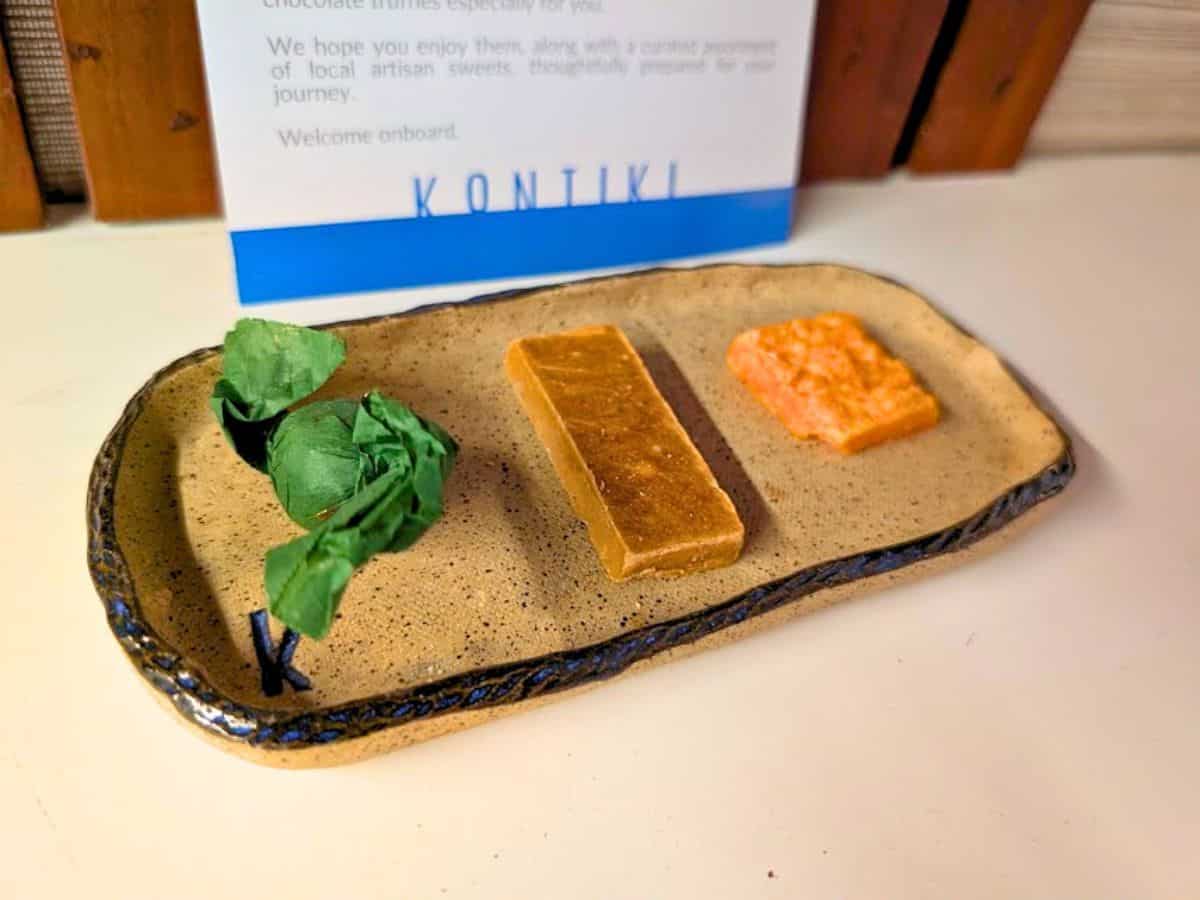
Your cabin also has a carafe of water and snacks in case you need them. We never did, but we loved the gorgeous, fancy chocolates and candies left in our room each night in place of the usual chocolate on the pillow.
There’s a coffee maker with coffee pods and tea, too. Skip it and get the really good coffee from the crew anytime you want it, as we did.
Where to Relax on the Kontiki Wayra
When I wanted downtime on board, I was either in the lounge that’s part of the dining area or up on the top deck.
The lounge has tables and chairs if you want to play one of the games on board, plus comfy seating for relaxing with a book. Each table has a small tray of chocolates that the crew constantly refills.
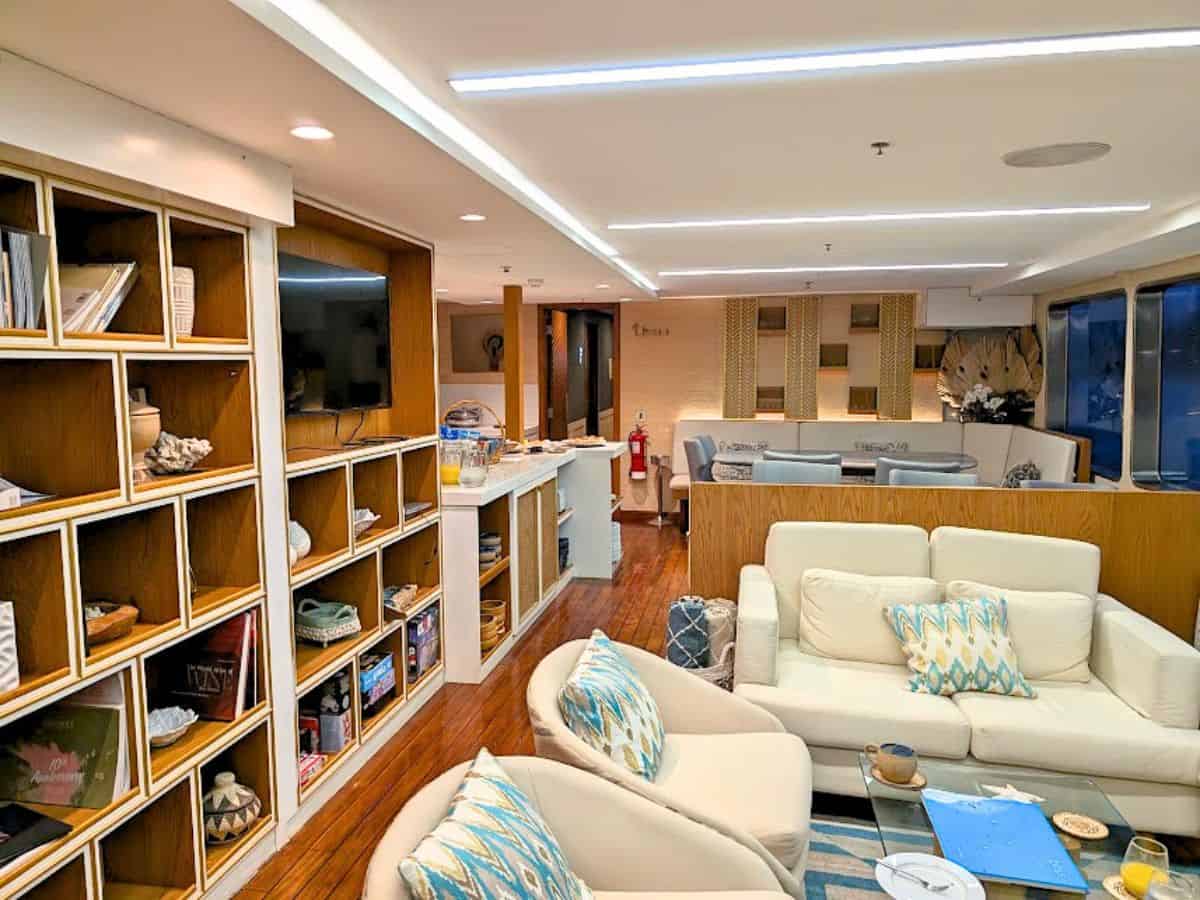
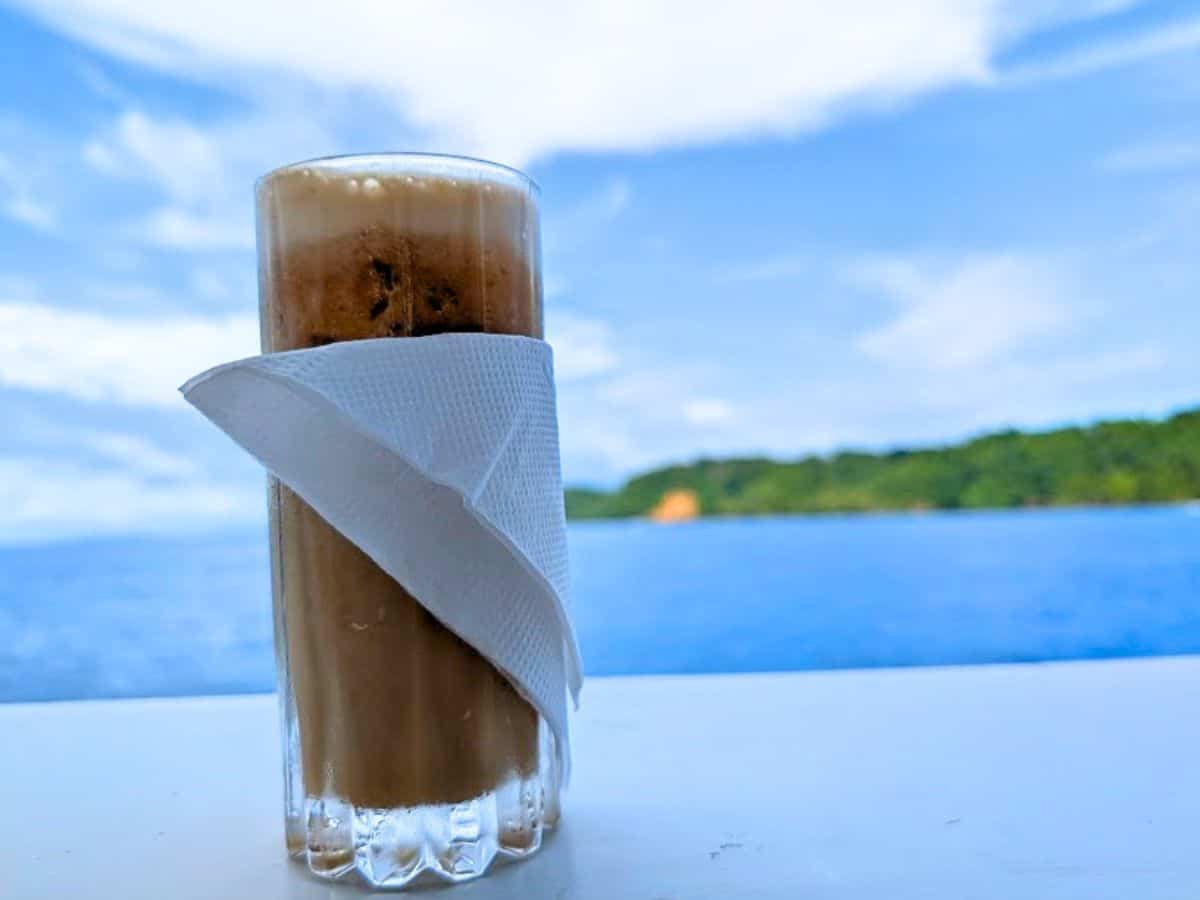
The small bar is here, too, and the crew was always offering me water, coffee, or anything else I wanted. After the first day, I hardly had to ask because they knew exactly the way I like my coffee: a decaf vanilla latte with oat milk, because yes, they do have dairy-free milk.
The top deck has a covered area with a table and chairs, loungers, a second bar, and even a hot tub, which pleasantly surprised me. When the weather was nice, all of us spent our free time up there. The views were amazing, and it was incredibly relaxing after a day of adventuring.
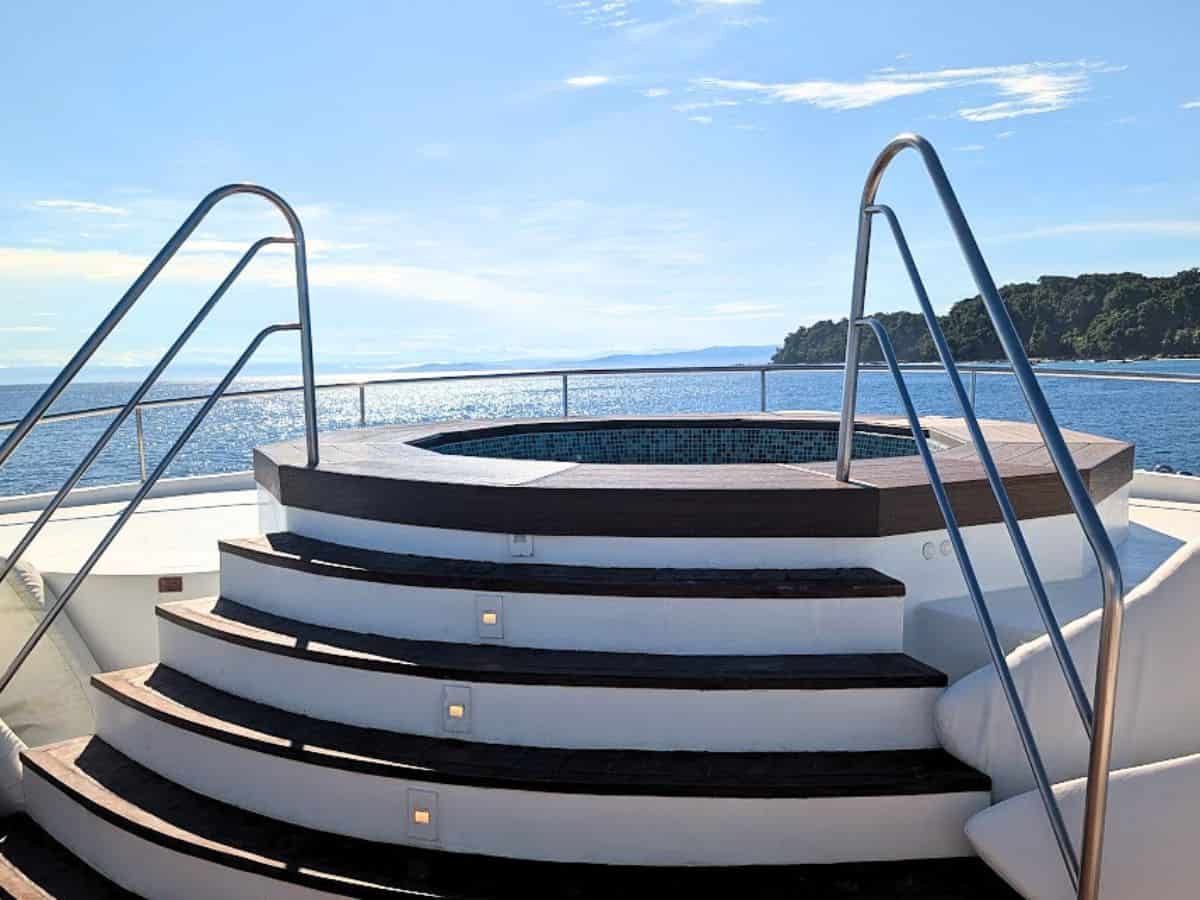
Is There a Spa and Gym on the Kontiki Wayra?
Yes, and both are near cabin 9. If you want a spa treatment, you need to arrange at least a day in advance because they need to bring the provider on board, and treatments cost extra. No one on our sailing booked one, but the option is there.
I never made it to the gym. Between hiking, kayaking, and swimming in the ocean once we got back to the yacht each day, I didn’t feel the need.
The gym is small, as you would expect on a ship this size. It still has plenty of equipment, space, and variety to ensure anyone with better discipline than I have can get a good workout.
What the Food Is Like on a Kontiki Cruise
The food was outstanding. I’ve been on small ships before, both river cruises in France and on the Amazon, and some small ships give you no choice at meals. What they serve for lunch and dinner is what you eat.
Kontiki works a lot like Delfin Amazon Cruises. Breakfast and lunch are a bountiful buffet, so you choose what you want and how much. Dinner is a plated, sit-down meal with two main-course options and sides served family style.
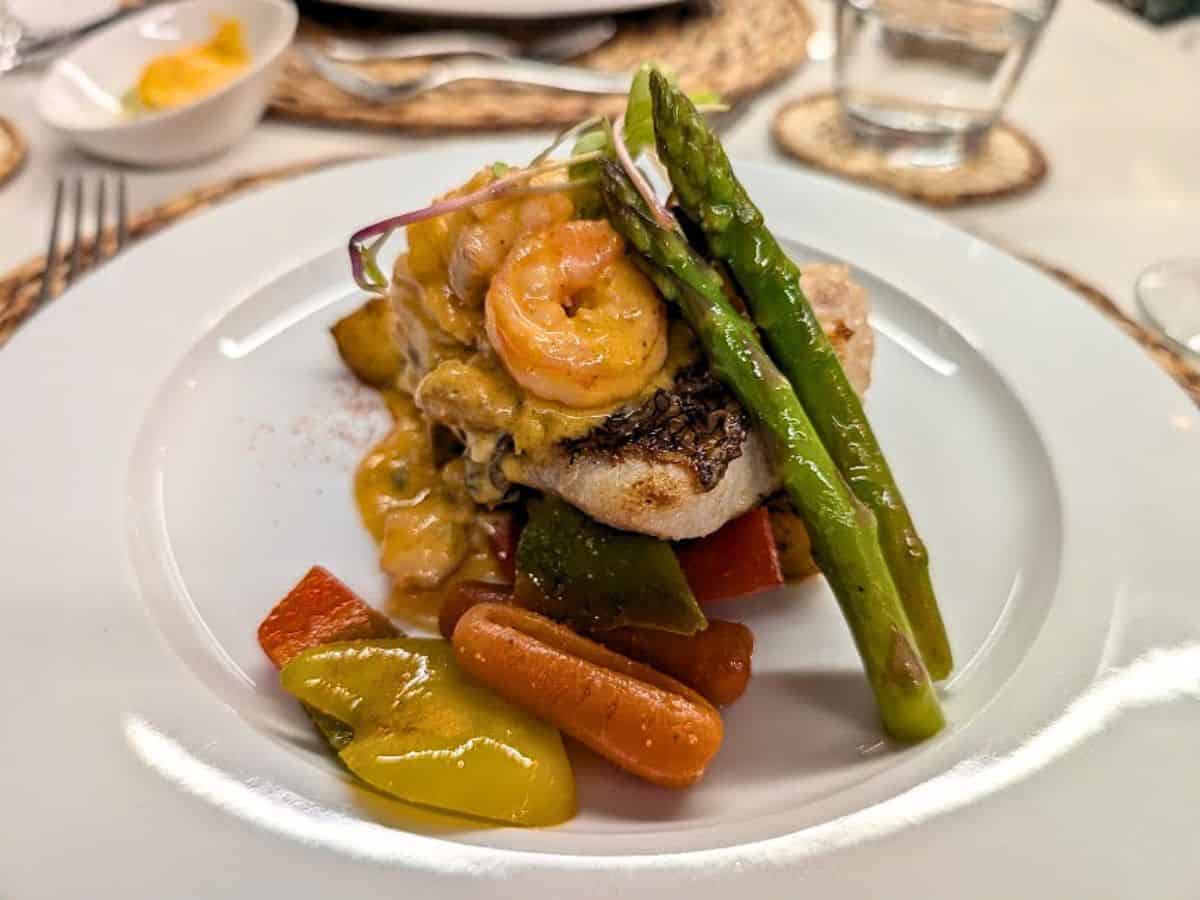
The menu had a local focus without being so out of the box that travelers would find it off-putting. Much of the crew is Ecuadorian, including the chef, so many dishes were Costa Rican or Ecuadorian.
There was a lot of fresh seafood, which I loved since we were on the ocean, and the chef would sometimes change the menu based on the fish they bought that day from local fishermen in port. What he did with red snapper is just heaven.
One day at lunch, we built our own poke bowls. I had a mix of tuna and salmon with avocado and so much more, and I went back for seconds, which I never do.

Another day, they served some of the best ceviche I’ve ever had, made with an aji amarillo leche de tigre. I told them I could eat it for the rest of the trip. I think they thought I was joking, but it was so good that I kind of wasn’t.
Dessert was just as good and often lighter, like a red wine-poached pear. My favorite was the espuma, a mango concoction they whipped into a light, airy foam somewhere between a mousse and whipped cream.
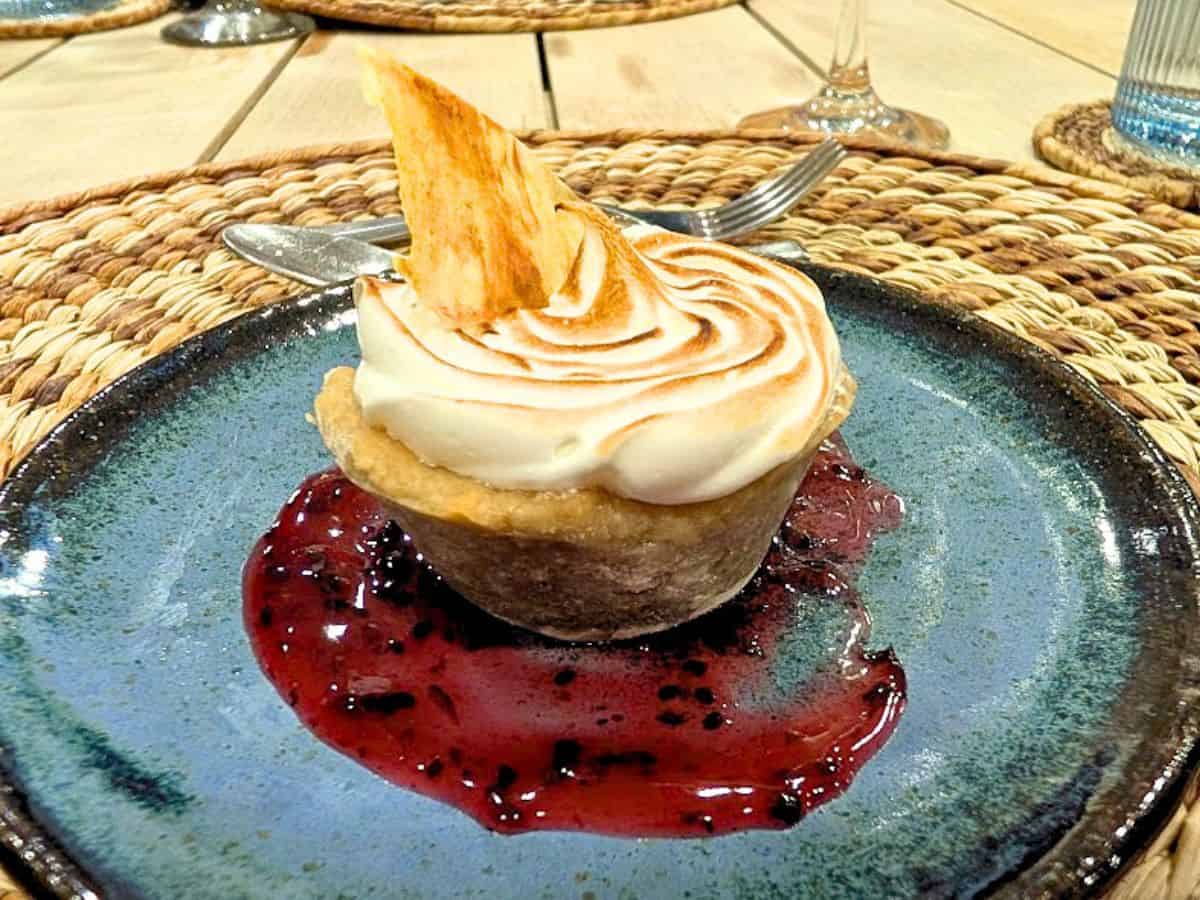
One night, we had a barbecue on the top deck with the chef cooking our dinner right in front of us. It was a fun change from the dining room.
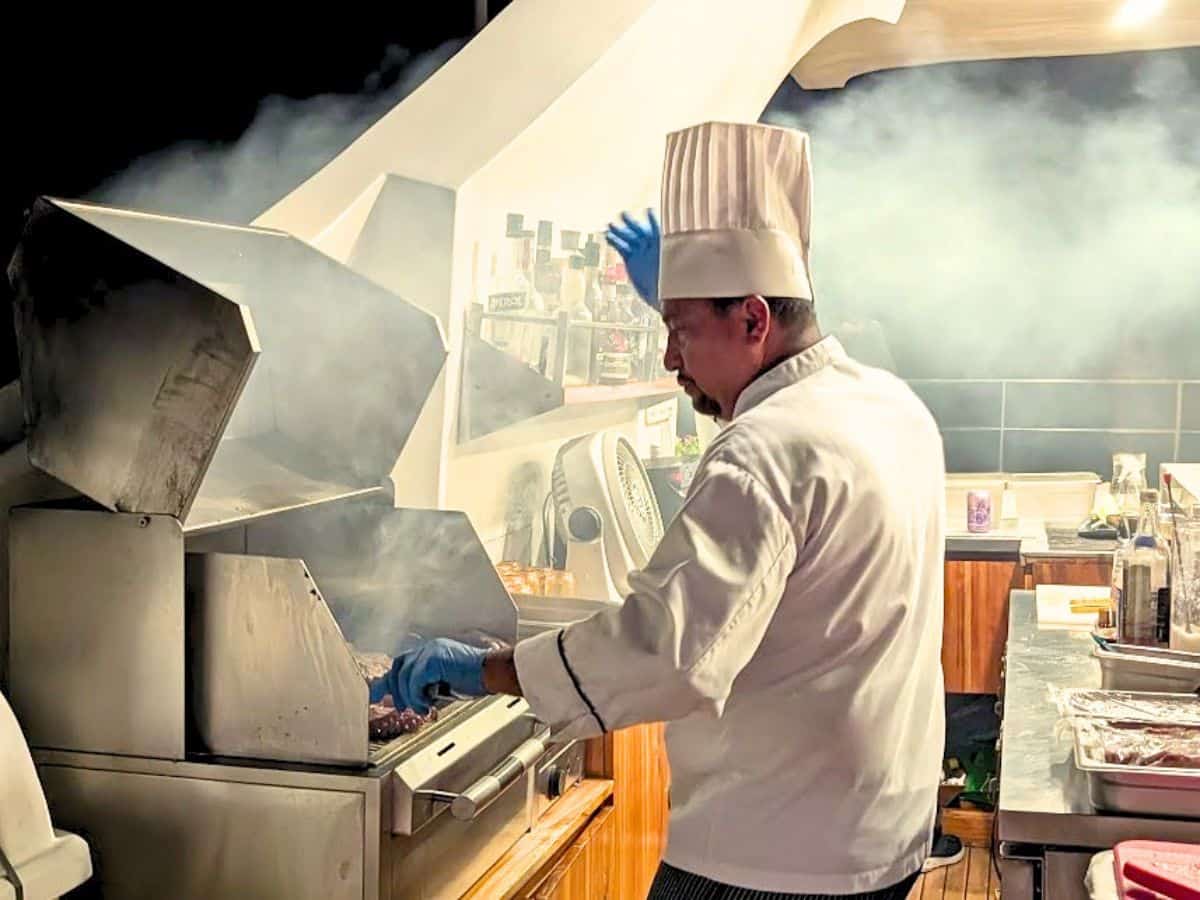
It went beyond just meals, however. Every time we returned from an excursion, the crew greeted us with a tray of refreshing beverages and snacks like melon wrapped in prosciutto. In the afternoons, they prepared even more elaborate snacks for us on the top deck.
No one ever went hungry or thirsty.

Does Kontiki Accommodate Dietary Restrictions?
Yes, and they’re great about it. I made the mistake of not thinking through how dinner would work on a ship like this, and one of the first nights, both main courses had ingredients I can’t eat.
They did a fab job of making sure I had something I could eat, even though I told them I’d be fine with just the sides. If there are any foods you don’t eat, let Kontiki know before you board so the kitchen can plan your meals in advance.
After that first oops on my part, they either altered my meal to avoid what I can’t eat or had options that didn’t include it. The crew also confirmed they can handle pretty much any allergy, as long as you tell them before you sail.
What’s Included on a Kontiki Costa Rica Cruise
Drinks are included, and that covers a lot. You can choose from pop and sparkling water, an assortment of wine and beer, other spirits, classic and signature cocktails, freshly ground local coffee, and organic teas throughout the day. Fine wines and premium spirits cost extra.
Wi-Fi is free on board. Kontiki said it would be limited, but it worked fine for what I needed and kept me in touch with the world, which I appreciate given what many ocean cruise lines now charge for internet at sea.
What Costs Extra on a Kontiki Cruise
You’ll pay separately for spa treatments, fine wines and premium spirits, any private excursions like scuba diving, and the rafting photos if you want them. I’ve covered those costs in the sections below.
Tip Your Crew
Gratuities are not included, and they run higher than what many ocean and river cruisers are used to. The suggested amount is $20 to $30 per person, per day for the expedition guides and $50 to $70 per person, per day for the crew, which works out to $490 to $700 per person for a seven-night sailing.
Considering the level of dedicated service, they absolutely deserve every penny. You can tip in cash using the envelopes left in your cabin on the last day, or you can pay by card.
Is a Kontiki Costa Rica Cruise Worth It?
This isn’t an inexpensive trip. Expect to pay approximately $7,500 per person for the cruise, depending on your itinerary, cabin, and the time of year, plus flights and tips.
It’s a bucket-list type of trip for most of us. If it fits your budget, though, the small boat, unique itinerary, amazing crew, fabulous food, and incredible attention to detail make a compelling case.
Be Flexible with Your Itinerary Expectations
The Kontiki Wayra has a naturalist on board. Each night, she gave us a heads-up on where we were going and what we’d do the next day, and she answered all our questions. That’s typical of expedition cruising, and it worked perfectly.
Unlike larger cruises, you don’t choose from an array of excursions each day. I arranged to go scuba diving one day while everyone else snorkeled, and you can opt out of any excursion you choose, but there’s generally one agenda for the day.
Plans can change with the weather. Near the end of our trip, the crew was concerned about conditions because we’d be leaving the more sheltered bays and heading out into the Pacific to reach Alcatraz Island with bad weather forecast.
Instead of just announcing a change, they let us choose. They laid out the options, including sailing there and back in rough seas with questionable weather or staying in Quepos, and we all voted to stay put for another day.
Part of the group went back out for a day of more intense whitewater rafting, while the naturalist took the rest of us to Manuel Antonio National Park as a last-minute change. They handled it incredibly gracefully, and none of us felt like it was a wasted day.
What Happens If the Seas Are Rough?
We had one evening when the seas were relatively choppy, and the crew was worried we might get seasick. They gave all of us seasickness medication at no charge, unlike a recent cruise I was on that sold a single dose for $3.30.
Thankfully, none of us had any issues, but it was another example of how well the crew took care of us. If you’re prone to motion sickness, these ways to avoid seasickness are worth reading before you go.
Snorkeling at Los Mogos
Our first stop was snorkeling at Los Mogos. Kontiki provides the snorkel equipment, and the crew used the Zodiac to bring people to and from the snorkel site.
If I could live in the water, I would, so I chose to swim to and from the spot instead. We snorkeled for about 40 minutes, and if you wanted to stop early, you could hang out in the Zodiac.
We saw some great fish, and I spotted a ray, too. The water was relatively shallow, and the naturalist let us explore on our own.
Kayaking the Río Esquinas
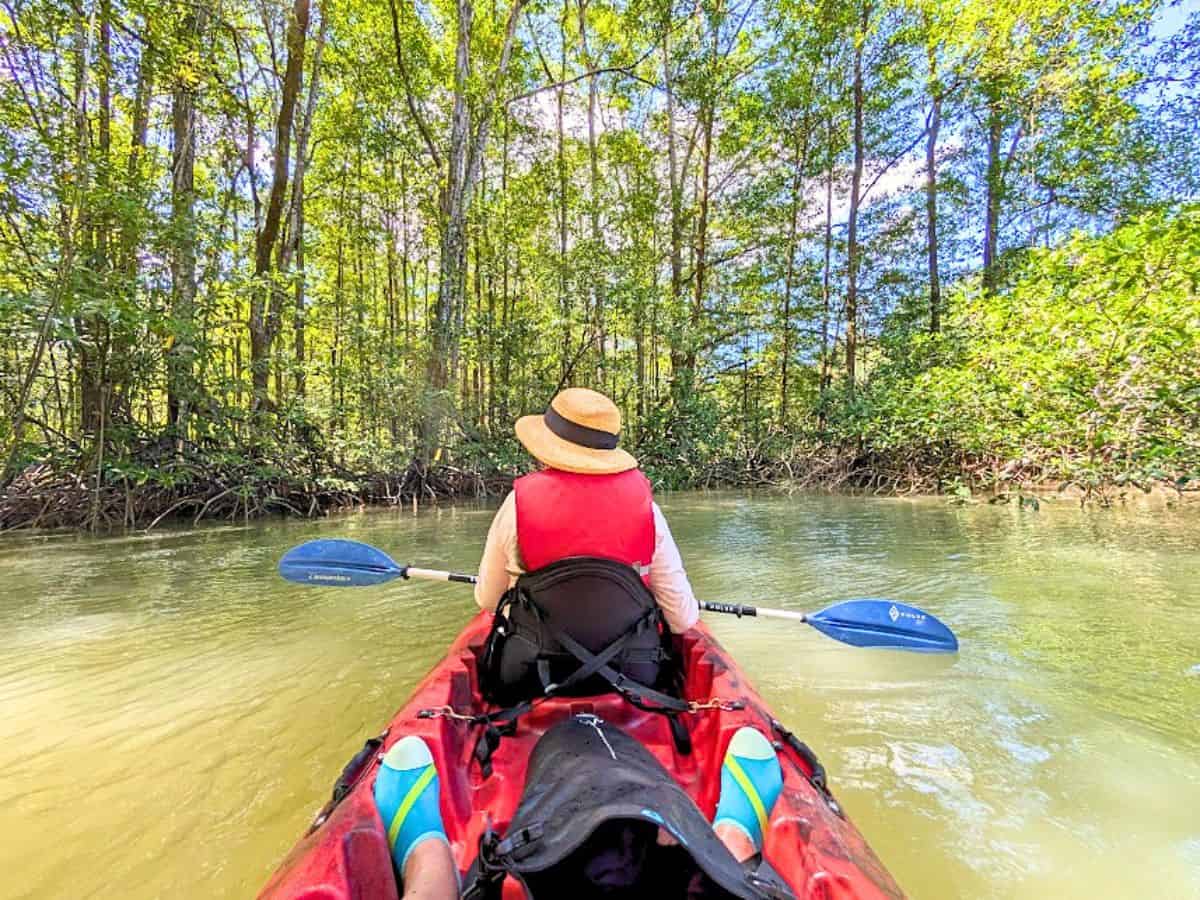
Later that same day, we kayaked the Río Esquinas, a tree-covered river where you can paddle deep into the mangroves down its different tributaries. It was more work than any of us expected, since we had to fight a current much of the way, but the views were gorgeous and worth the effort.
When we got tired, the crew picked us up in the Zodiac and towed our kayaks back to the Wayra. That was exactly what we needed once we decided we’d had enough kayaking for the day.
Visiting the Finca Kobo Cacao Farm
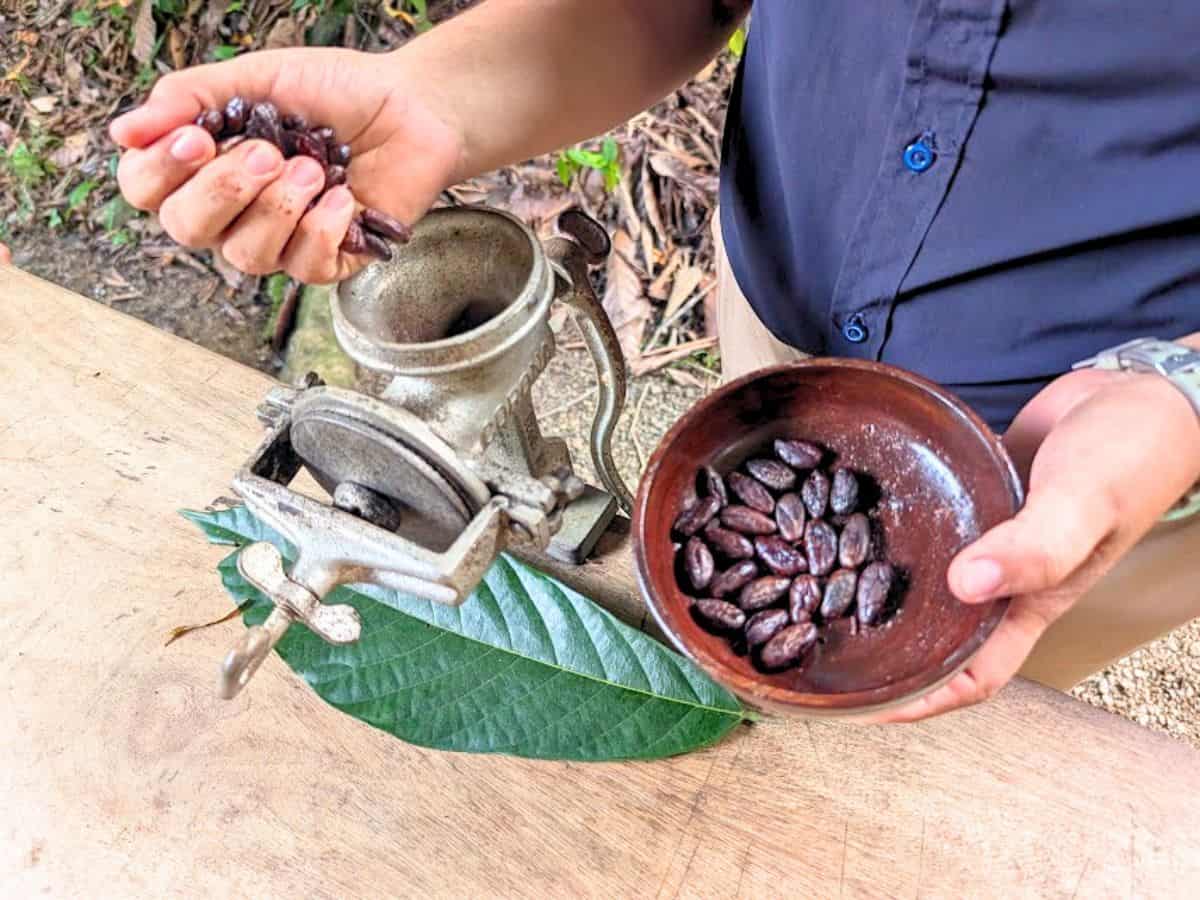
At Finca Kobo, we learned how chocolate is made from seed to pod to turning the fruit into chocolate, and we got to try grinding the cacao by hand. The visit ended with a slice of the delicious chocolate cake they make there, plus watermelon and glasses of water to refresh us.
We also toured their botanical garden and learned about so many different plants. We tried two kinds of star fruit, where I was the only one in the group who preferred the more sour variety that doesn’t get exported over the milder one you find in grocery stores.
Scuba Diving at Isla del Caño
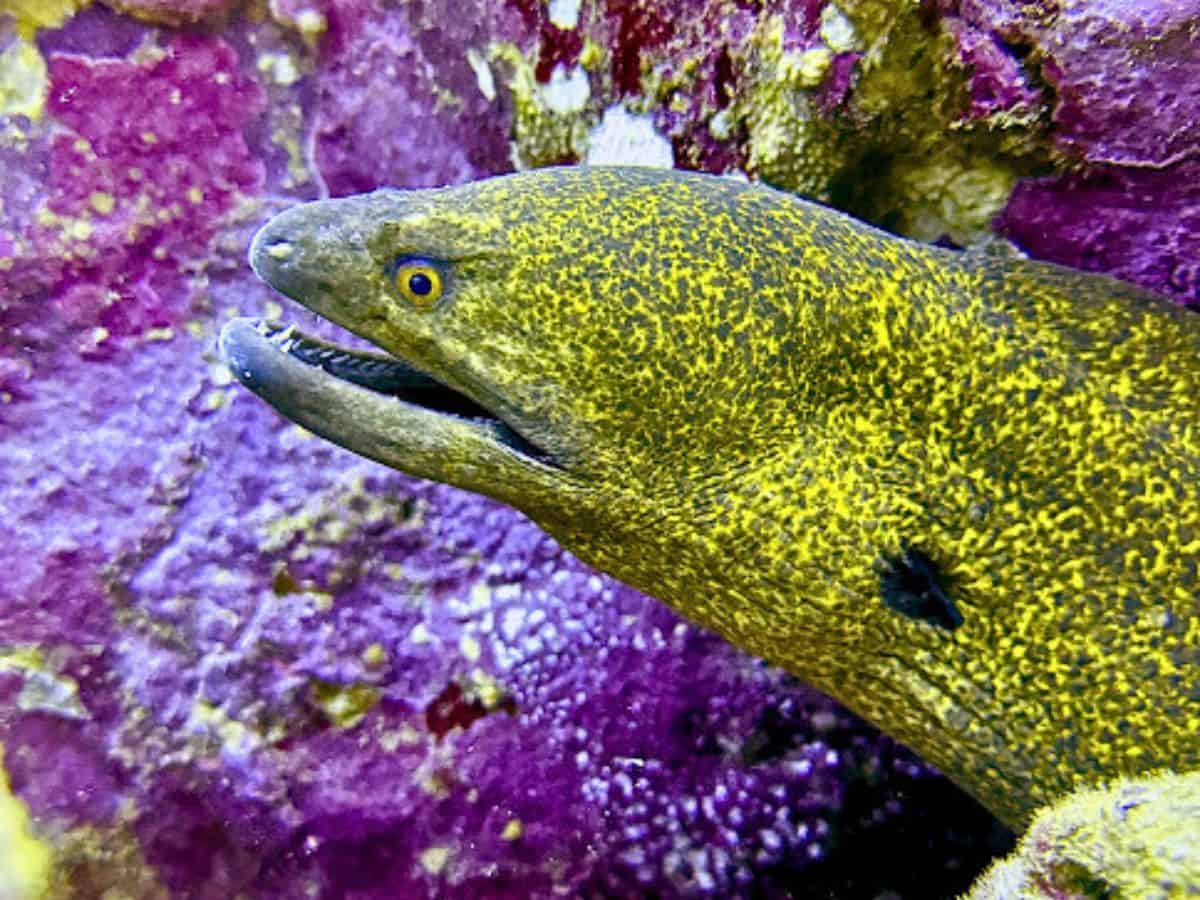
If you’re a certified diver, you can arrange a dive during your cruise. While the rest of the group snorkeled at Isla del Caño, I went scuba diving, and it was a fantastic experience, including a lovely dive buddy who sent me all his photos.
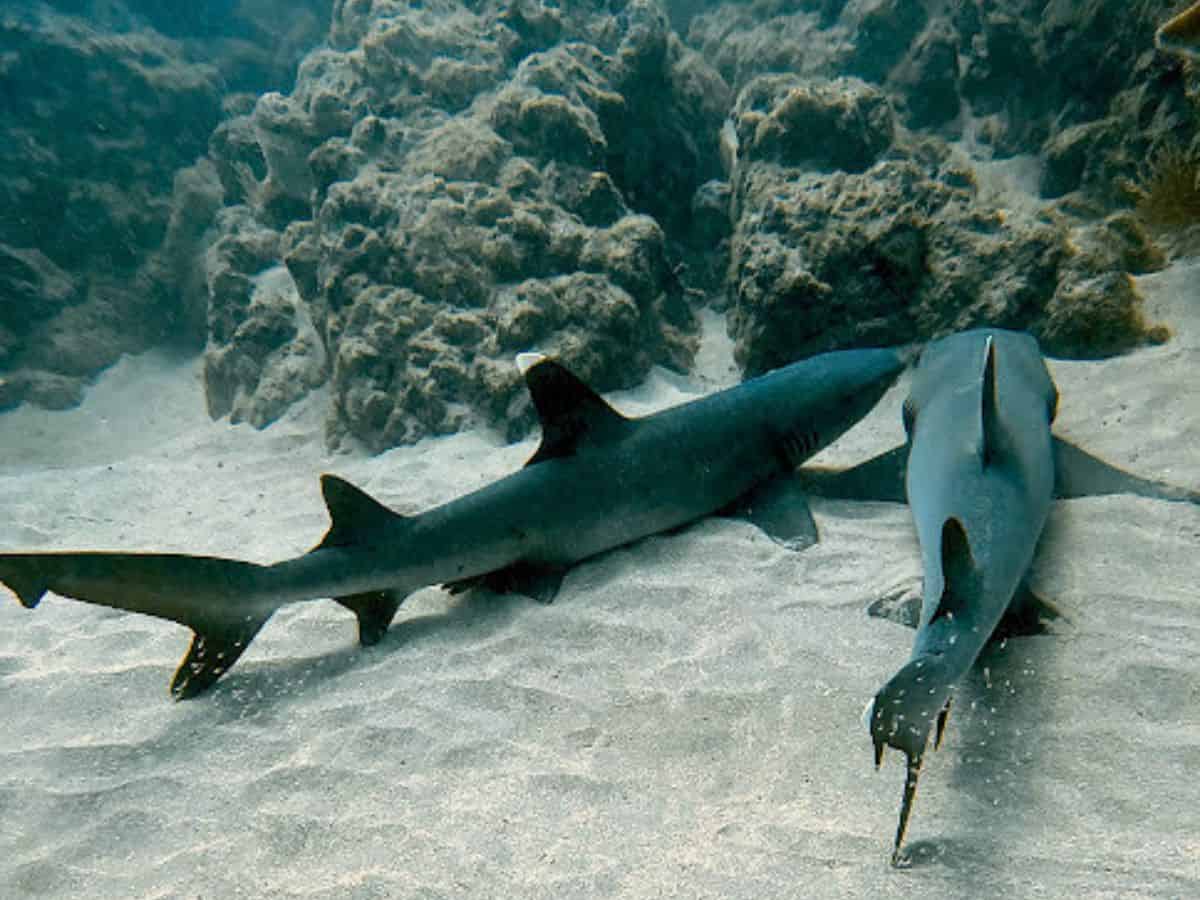
The dive operator picked me up from the yacht with a small group of experienced divers, and we did two amazing dives. The current was strong, and visibility was a little low after the storm the night before, but we still saw so many unique fish and sharks and had a great day underwater.
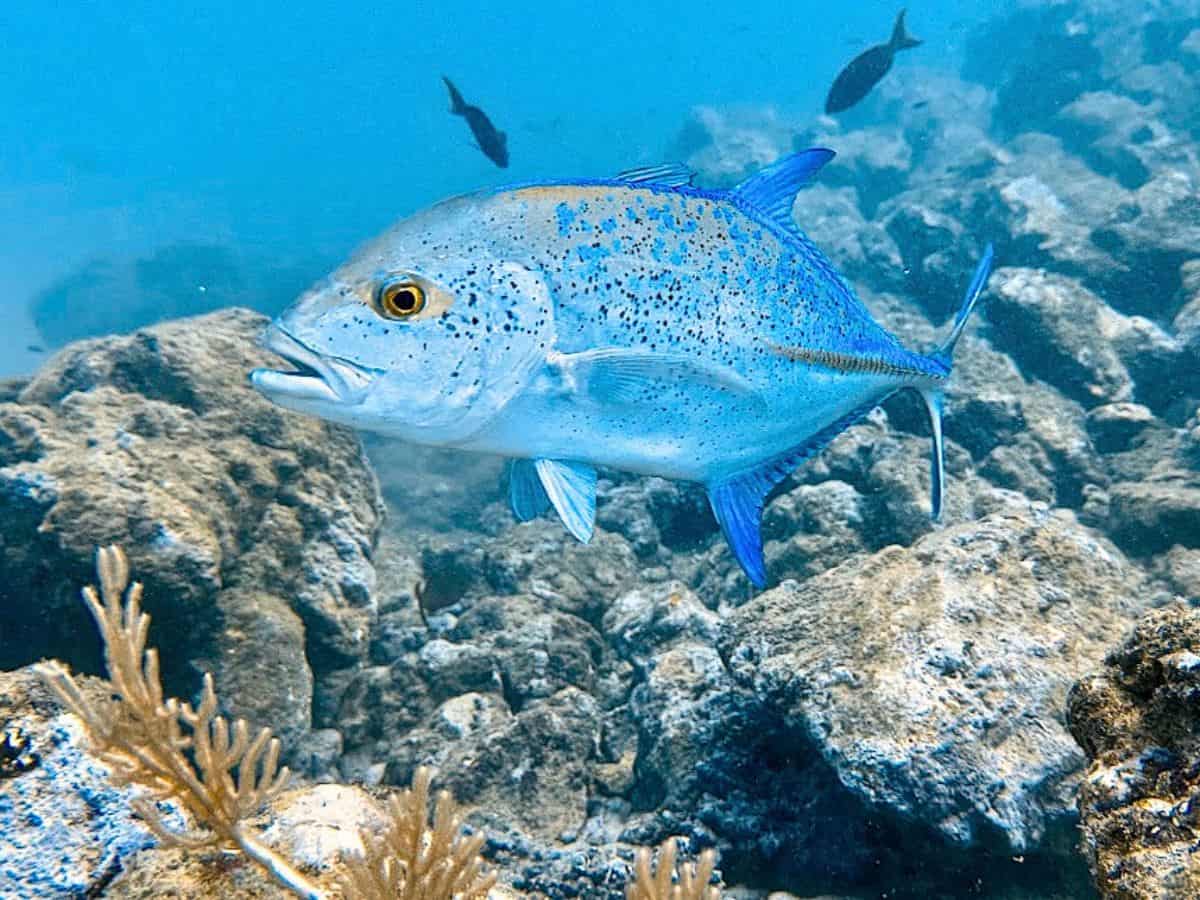
My two-tank dive, including all the equipment they provided, cost just over $163 after the exchange rate. I arranged it through Kontiki, which made it easy, and I recommend doing the same if you dive.
Hiking Corcovado National Park
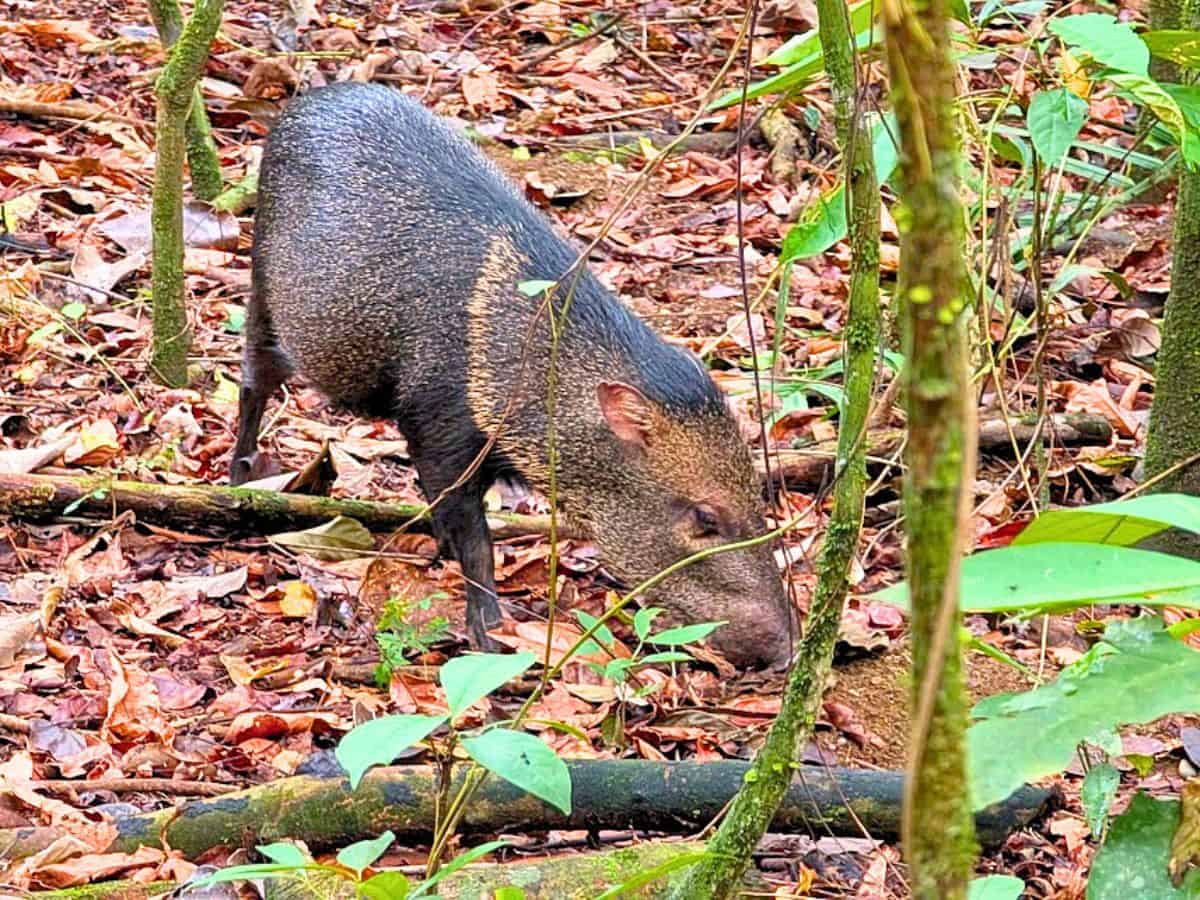
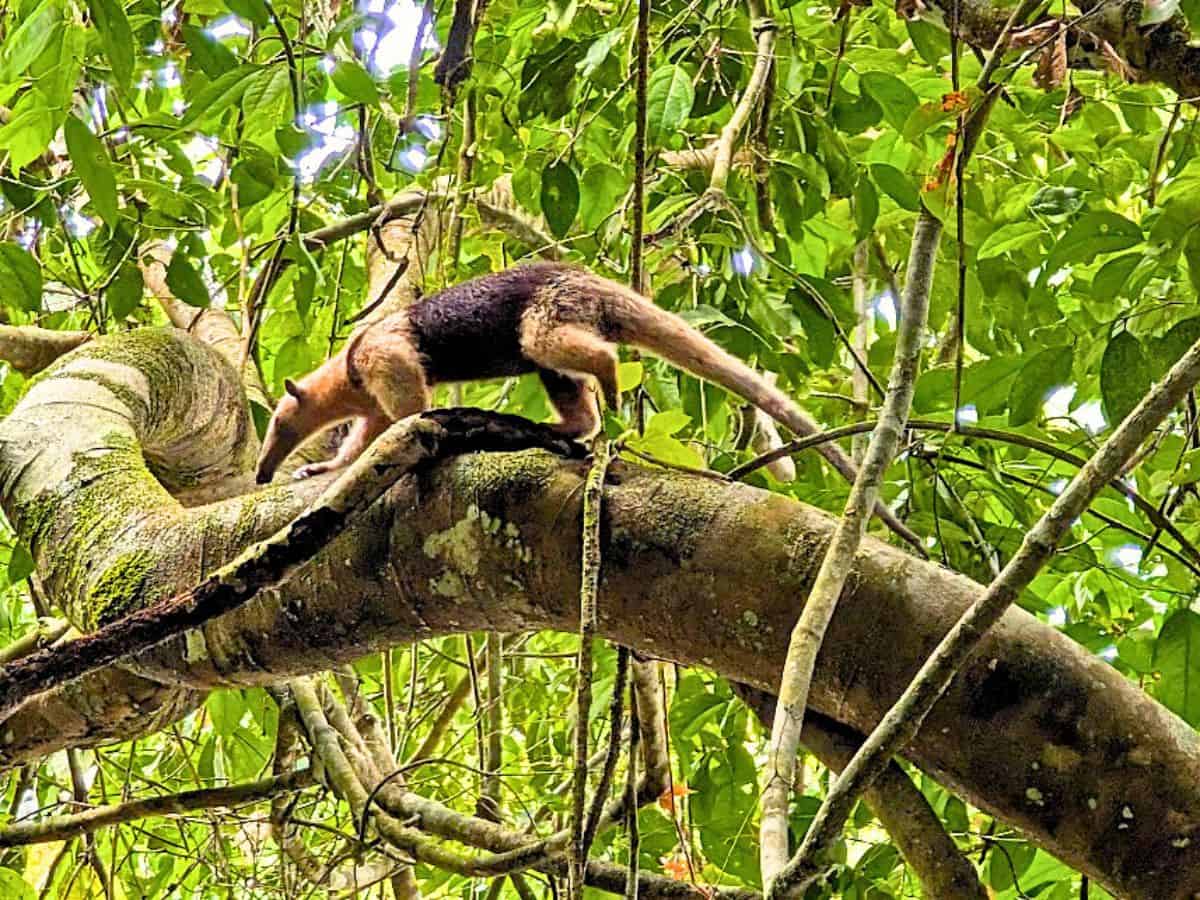
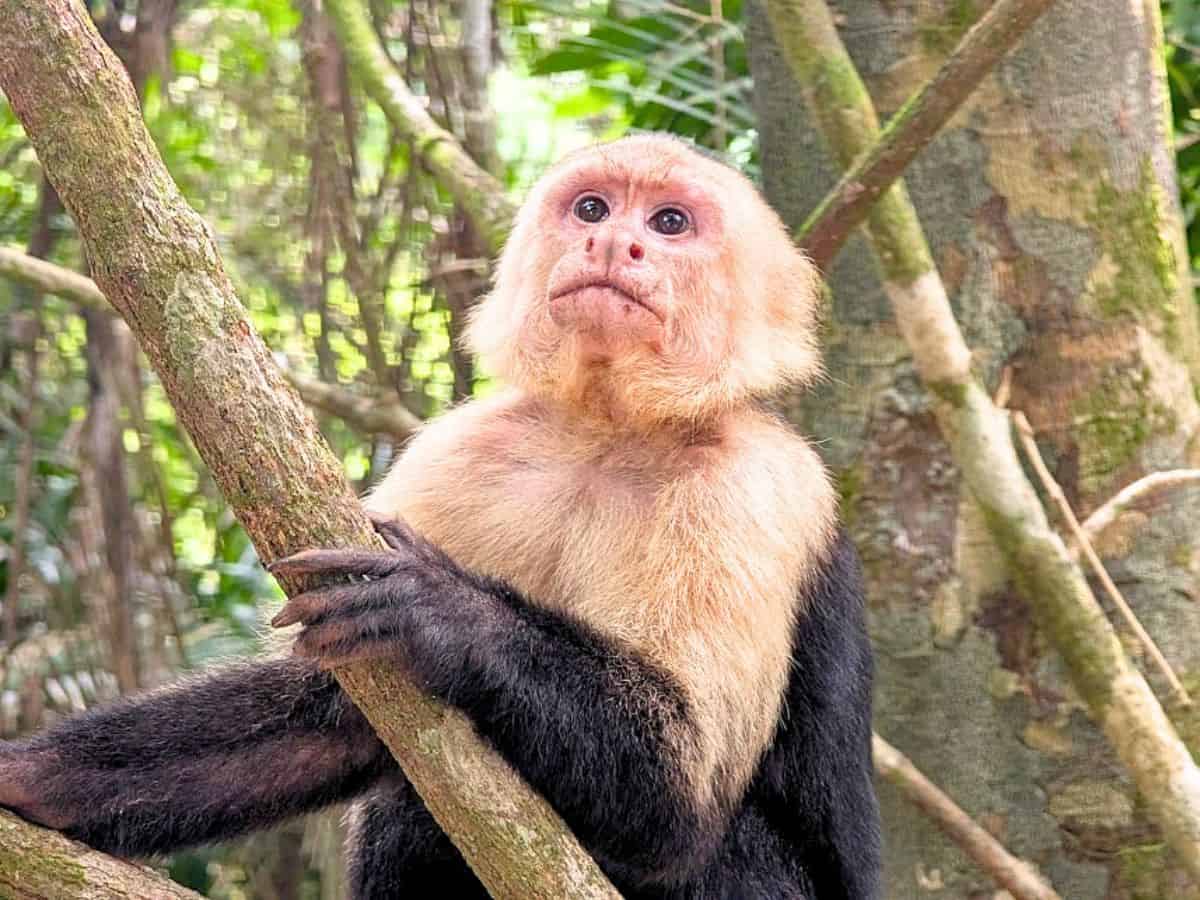
I fell in love with Corcovado National Park on the Osa Peninsula. You can only visit with a guide, and because it’s so quiet and remote, the animals weren’t afraid of us and just went on with their day.
We saw an anteater, wild boars, turkeys, and, of course, sloths and monkeys. We had moments with the monkeys and the boars when they were so close we could almost touch them, though we kept our distance because they’re wild and unpredictable.
My magical moment was a band of hundreds of coatimundis, from babies to adults, hanging out just to our right on the trail. They didn’t care about us at all and ran across the path to play and look for food on the other side. One came so close it almost ran over my foot.
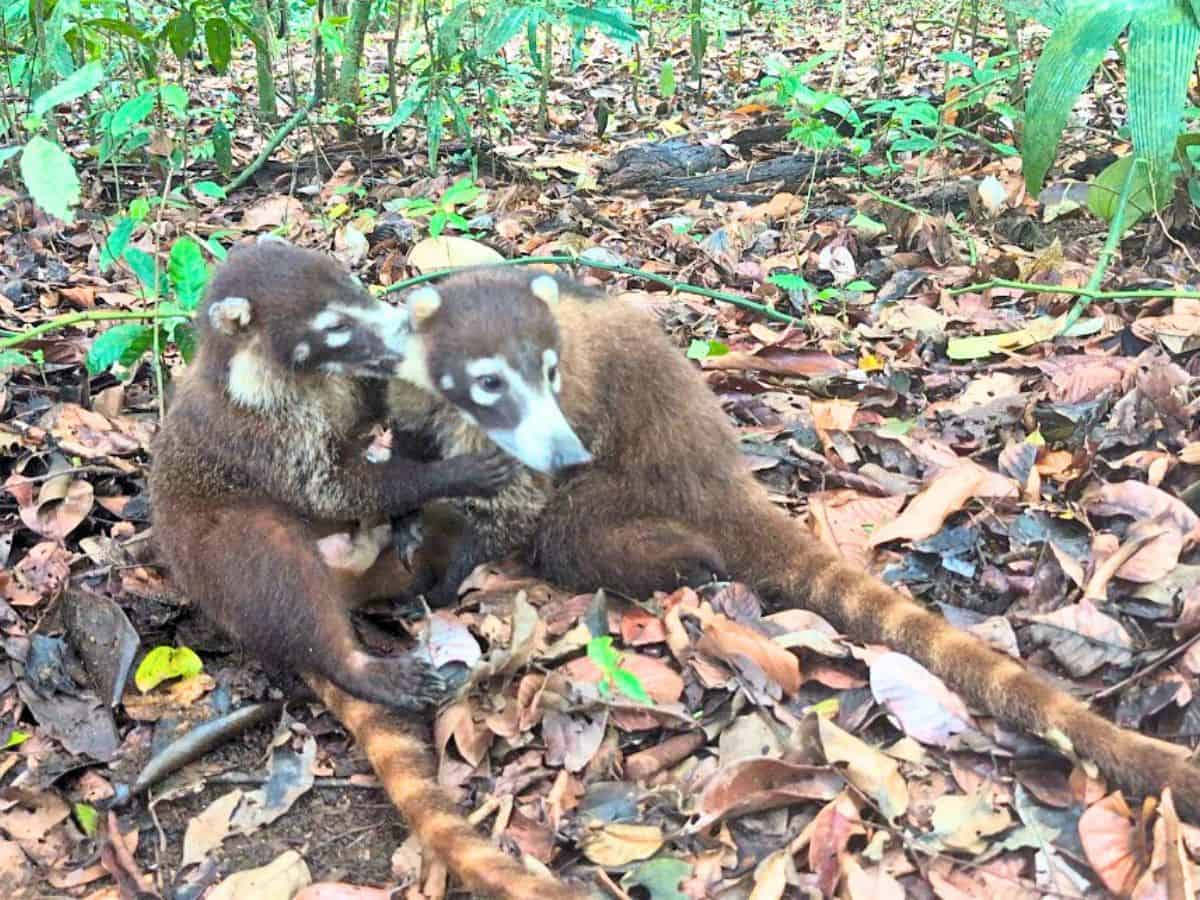
We stood there watching them for at least a half hour while the babies rolled around playing with each other and others climbed the trees. I’ve seen coatis before, but never this many at once and never so unbothered by people.
That’s the best part of this kind of cruise. We weren’t on a two-hour excursion with a deadline to get back to the ship, so we stayed as long as we wanted and went back to the yacht when we were ready. You just don’t get that on other kinds of cruises.
Whitewater Rafting on the Savegre River
I loved trying things I’d never done before, and whitewater rafting was one of them. We rafted the Savegre River with Tucanes Tours for two hours, and I could have kept going for hours more.
The rapids weren’t too intense, and our guides were great instructors. Partway through, we stopped for a break, hiked up a stream to a waterfall, and hung out there for a bit.
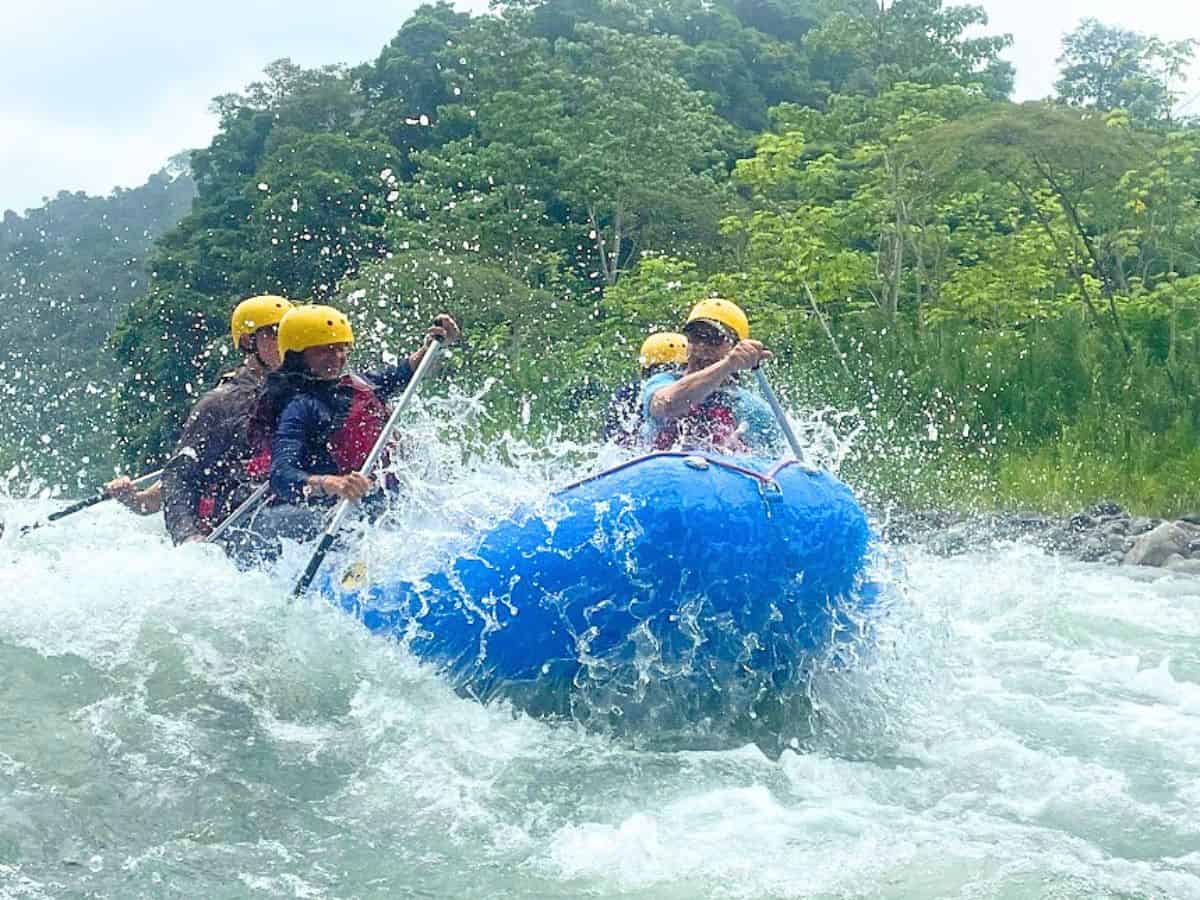
Tucanes Tours was the only outside excursion company on our cruise, and they had a photographer along who sold the photos at the end. They started at $60, but our group leader negotiated them down, and we got all the digital images.
It was worth it. I got great action shots I never would have otherwise, and the waterfall photo is now my Facebook profile picture because I like it so much.
Visiting Manuel Antonio National Park
Manuel Antonio was much more crowded than Corcovado, where it was essentially just us, but we still had a great day exploring the jungle there. Our naturalist was great at finding animals and pointing them out, from multiple kinds of sloths to various monkeys and so much more.
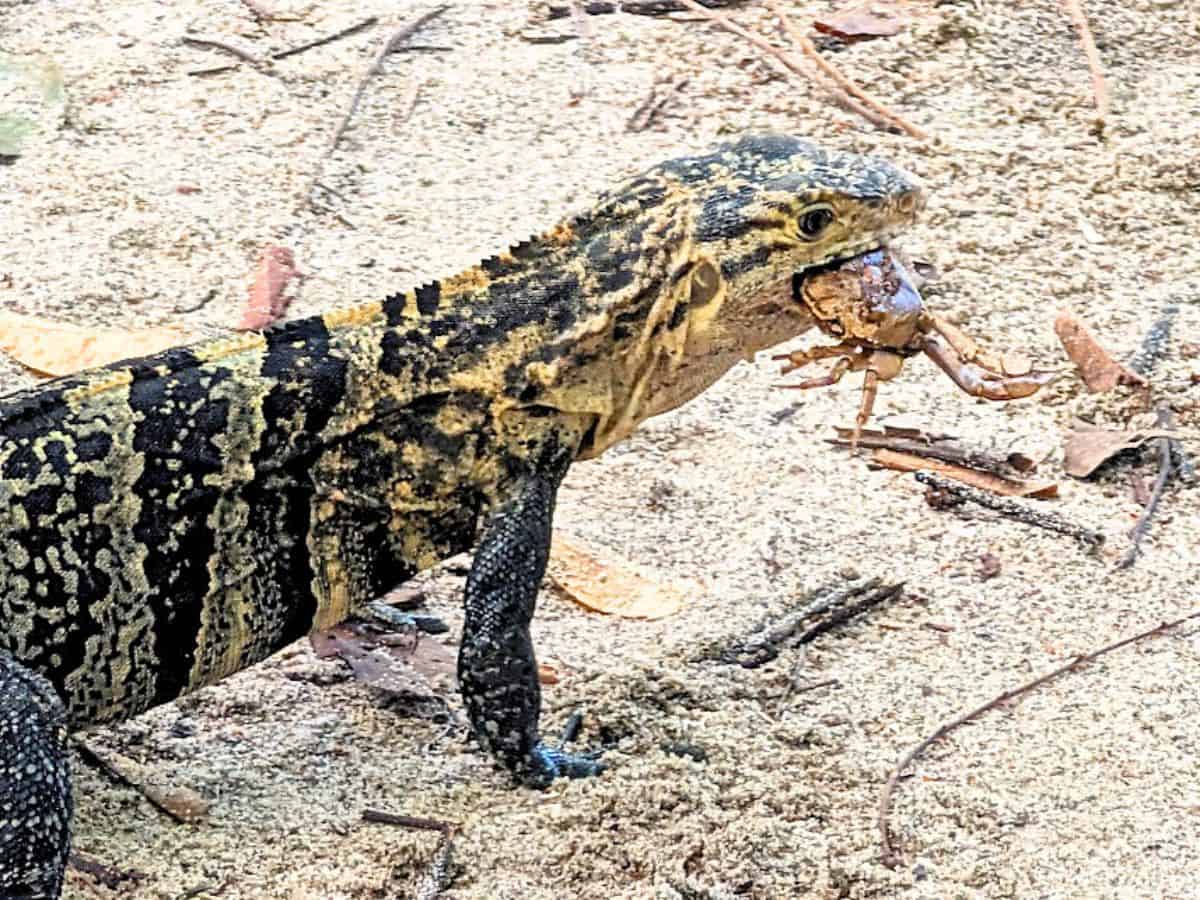
We even watched an iguana successfully hunt a crab just feet from us. The naturalist gave us time to swim in the ocean, which made the day feel complete even with the change in plans.
What Water Toys Are on the Kontiki Wayra?
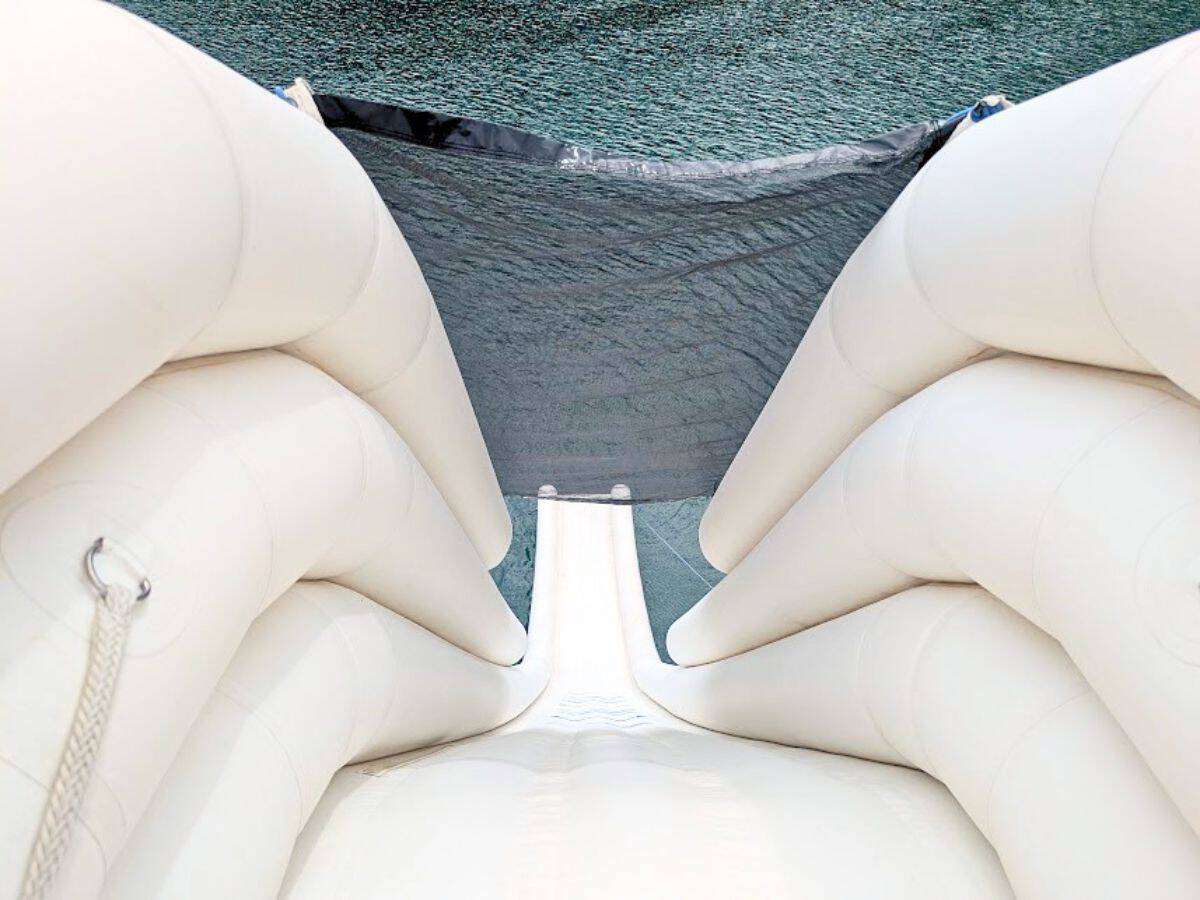
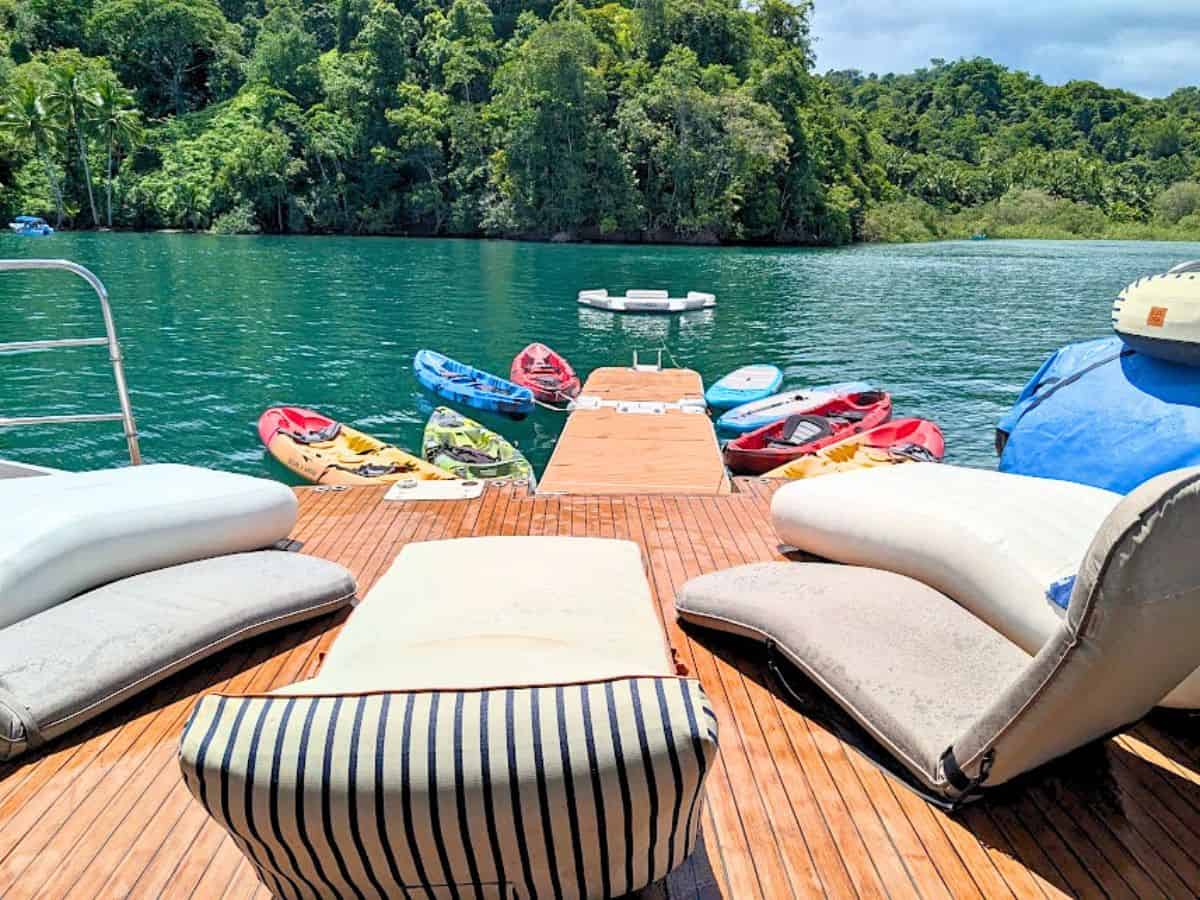
After we got back to the yacht each day, the crew set up a water play area for us. There’s a giant inflatable slide off the top deck (and yes, I went down it, and it was fun), plus kayaks, stand-up paddleboards, a floating dock, and snorkel gear.
My personal favorite was the SeaBobs. I’d never used them before, but they’re like small electric jet skis that you hold onto with your arms and ride through the water. They have different speed settings, and you can take them underwater, too.
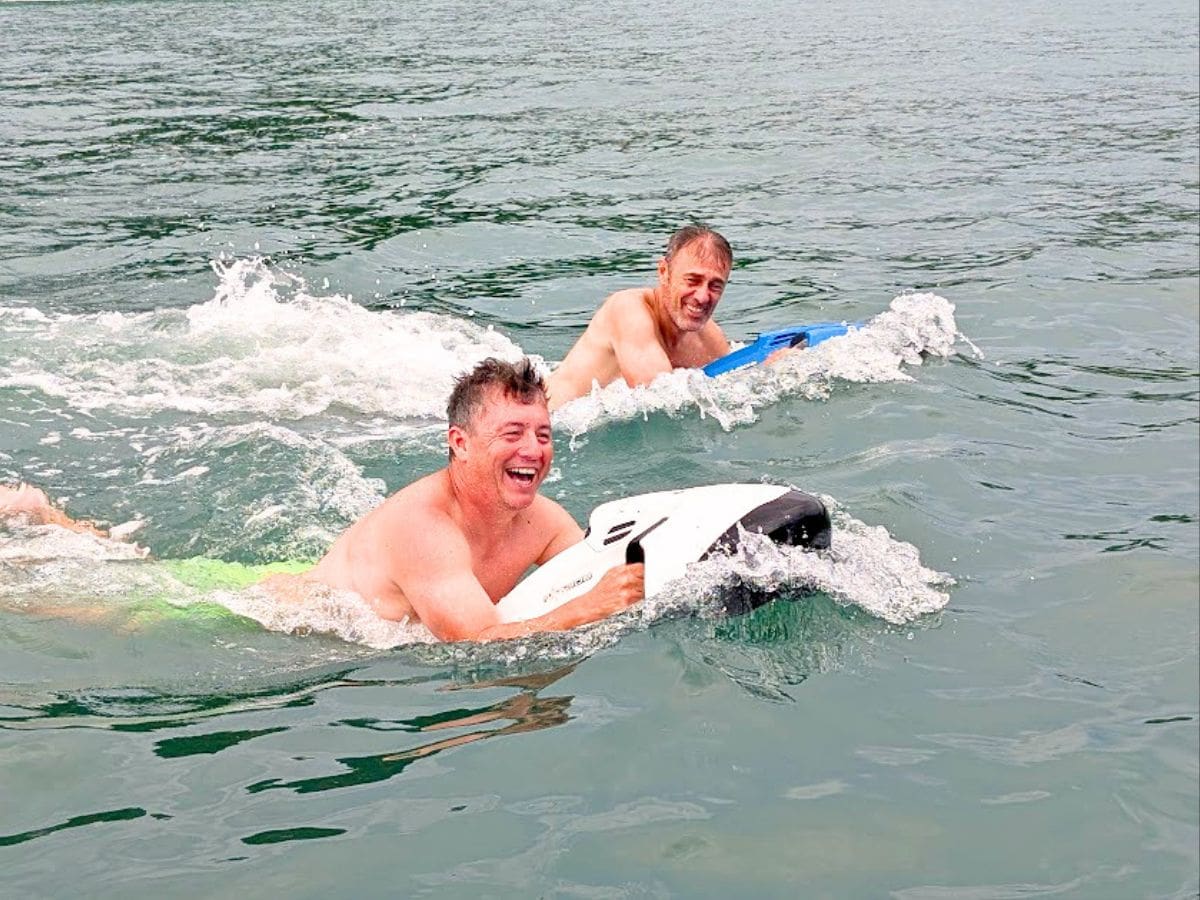
I borrowed a snorkel mask so I could keep my eyes open while I dove with the toy. The visibility wasn’t great, but it was super fun and relaxing. At the end of the day, the crew pulls everything back onto the yacht and sets it up again at the next stop.
Best Time of Year for a Costa Rica Cruise
June was a good time for this cruise. It’s the shoulder season, so it’s less crowded, which I like.
It was hot, and we had rain at night, including an absolutely gorgeous and slightly terrifying thunderstorm with huge lightning nearby. We never had rain during the day, though we were prepared for it.
The only months I’d probably avoid are September and October, because that’s when it’s rainiest. Then again, I just got back from an Alaskan cruise during its supposed rainy season, and our week had the best weather they’d seen all season, so you never know.
What to Pack for Your Costa Rica Expedition Cruise
It was hot, so I brought powdered electrolytes, and I was glad I did. Bring bug spray, reef-safe sunscreen, and a good hat to protect yourself from the sun.
Water shoes were one of the most useful things I packed, and I’m so glad I brought them. Some excursions have wet landings where you walk through water up to your knees to reach the beach.
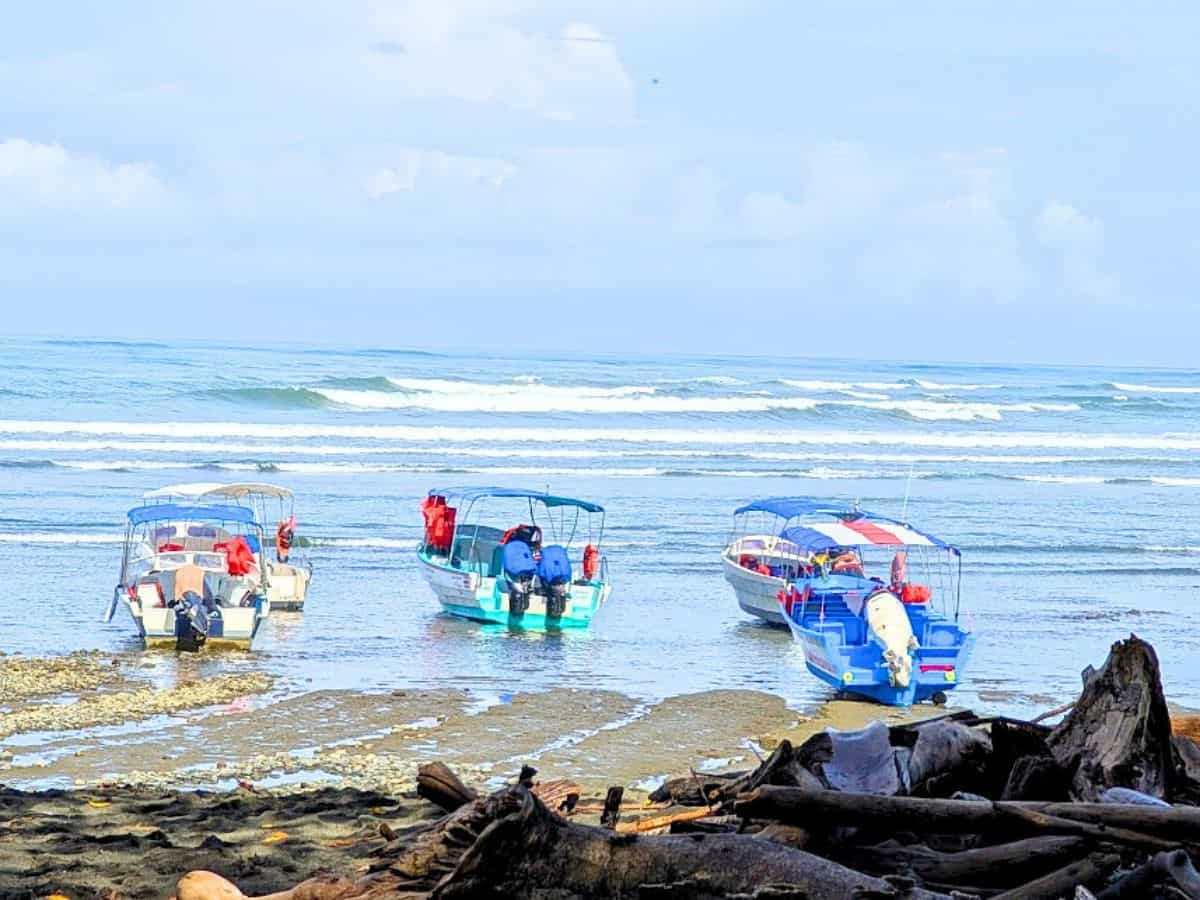
Skip the cheap ones and get a sturdier pair that’s more like a sneaker. Mine have thick rubber soles, so they’re comfortable even when walking on rocky trails.
Pack a lightweight rain jacket and a few extra changes of clothes in case you get wet. You’ll still want closed-toe shoes for the hikes, but I skipped my hiking boots and was fine without them.
The good news is that no one dressed up for dinner. Most of us wore whatever we’d had on all day, so you can pack far less than you think, which also helps with the SANSA weight limit.
You’ll want swimsuits, a rashguard, shorts and T-shirts, plus longer pants for jungle hikes, and quick-drying shorts for the whitewater rafting. You don’t need dresses, and we never needed anything long-sleeved.
A small bottle of nail polish comes in handy, too, for labeling your water bottle. You’ll find a metal reusable water bottle in your cabin, and they all look alike, so this helps you know which is yours.
Getting to Golfito
You arrange your own flights, though Kontiki can help. I flew LATAM into San José the day before the cruise and spent the night in a hotel, then went back to the airport to fly SANSA to Golfito on the smallest plane I’ve ever been on.
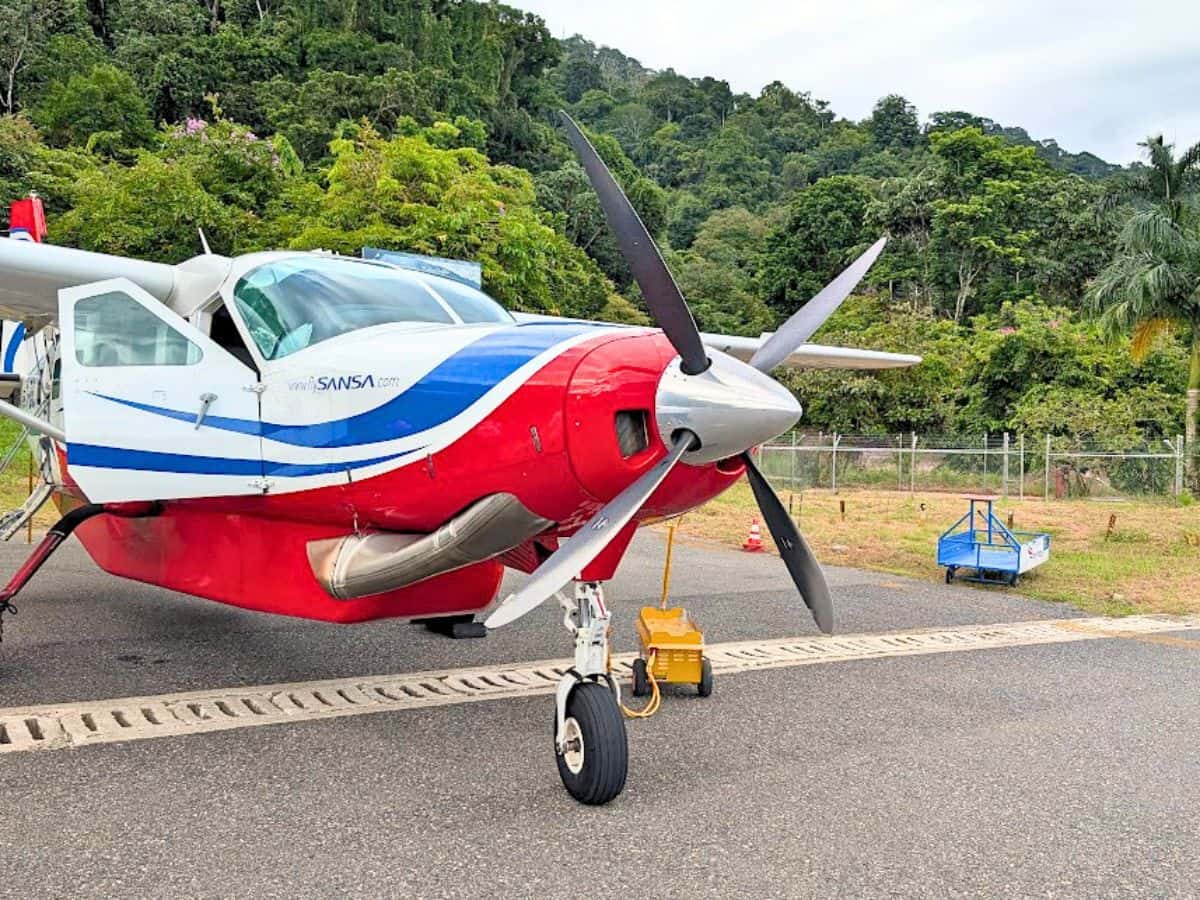
Our 12-person flight was full, so our luggage couldn’t fly with us because of the weight. SANSA sent it on a flight an hour later, and it showed up in our cabins with no effort on our part.
Kontiki picked us up at the Golfito airport and brought us to the yacht. Half of our group, who had taken an earlier flight, was already on board and relaxing when we arrived.
There’s essentially no aisle on the plane, so everyone gets a window seat. Keep your eyes on that window the whole flight, because the views are incredible. You fly over forests, mountains, and the coast, and they’re gorgeous from above.
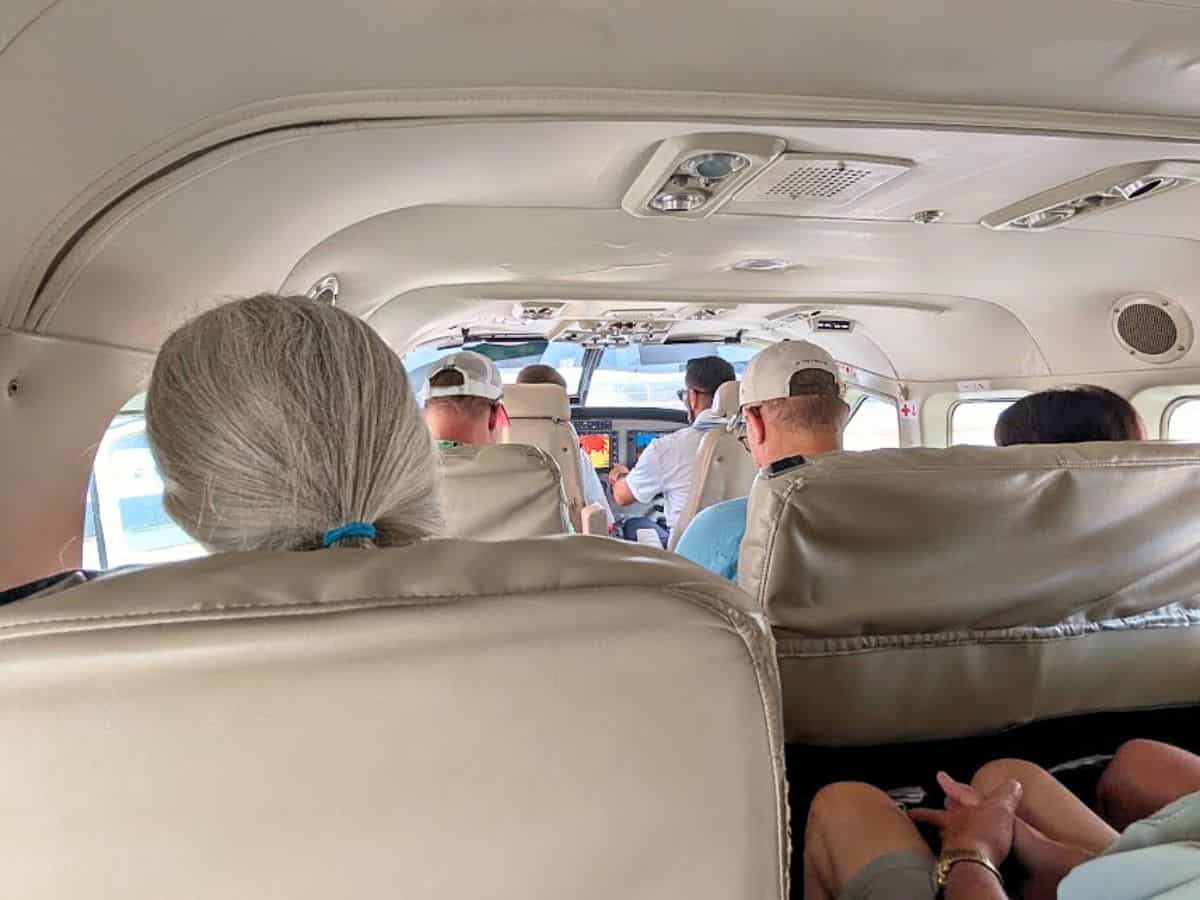
Turbulence wasn’t an issue on our flight, but it was a little disconcerting to be on such a small plane. Weather can be a factor, and you can arrange a ground transfer if you prefer.
Sansa Baggage Limits and Fees
The plane is small enough that SANSA weighs every passenger along with their luggage. The limits are far lower than what we’re used to in the States, so pack with them in mind.
Carry-on bag
- Maximum size: 12 inches wide, 20 inches tall, and 8 inches deep (30 x 50 x 20 cm)
- Up to 10 pounds (4.5 kg) at no charge
- Between 10 and 15 pounds (4.5 to 6.8 kg), an excess baggage fee may apply
- Anything over 15 pounds (6.8 kg) has to be checked
Checked bag
- Maximum size: 30 inches tall, 18 inches wide, and 13.5 inches deep (76 x 46 x 34 cm)
- Our fare allowed 30 pounds (13.6 kg) per person, but different fares have different allowances
- Extra weight costs $1.50 per pound, paid directly to the airline
I was very careful to stay under the limit. In hindsight, I’d pack just a little bit more and pay the fee. To me, $1.50 a pound isn’t much compared to overweight fees in the States.
Kontiki Costa Rica Cruise FAQ
Is Kontiki Expeditions the same as Contiki?
No. Kontiki Expeditions is a small yacht cruise line in Costa Rica and Panama. Contiki is a separate tour company for travelers ages 18 to 35.
How many passengers does the Kontiki Wayra hold?
The Kontiki Wayra carries a maximum of 18 passengers in nine cabins.
Can you flush toilet paper on the Kontiki Wayra?
No. Because it’s a small boat, you can’t put anything in the toilet, including toilet paper. It took some getting used to. It’s common in many places I’ve visited in South America and elsewhere, but this was my first time dealing with it on a cruise ship.
Is there a dress code on a Kontiki cruise?
No. Nobody dressed up for dinner on our sailing, and most of us wore what we’d worn all day.
Are drinks included on a Kontiki cruise?
Yes. Soft drinks, sparkling water, wine, beer, spirits, cocktails, coffee, and tea are included. Fine wines and premium spirits cost extra.
Is Wi-Fi free on the Kontiki Wayra?
Yes. It’s described as limited, but it worked well enough for me to stay in touch all week.
Are tips included on a Kontiki cruise?
No. You pay gratuities for the crew and guides separately at the end of the cruise, in cash or by card.
Is the Kontiki Costa Rica cruise good for kids?
Kontiki strongly suggests that children be at least 6 years old. Given the type of experience we had, I can’t imagine having brought my (well-traveled) kids until they were in their mid-teens.
I am a participant in the Amazon Services LLC Associates Program, an affiliate advertising program designed to provide a means for sites to earn advertising fees by advertising and linking to Amazon.com.