When you go on safari, you look for the Big 5. Other locations around the world have their own unique animals to watch out for, and the animals in Patagonia are no exception.
If you are lucky enough to visit, you’re likely to see animals that may look somewhat familiar but aren’t quite the ones you’re used to. The guanaco, for example, is reminiscent of a llama but definitely not the same.
Depending on where you go, the time of year, and, quite frankly, how lucky you are, you may see all of these, but more likely, some will escape you. When I visited Torres del Paine in late March, I saw all but a few of these, and I’m still bummed that I didn’t see a puma.
Like my trip to the Amazon, I had animals I knew I wanted to see and others that surprised me. Yes, Patagonia has its own Big 5, but there are others outside that list to watch for, too.
Some links in this article are affiliate links that may earn me a commission if you purchase through them.
Exploring The Edge Of The World
Patagonia is a vast, sparsely populated region at the southern tip of South America, spanning both Chile and Argentina. During my recent trip, I visited the Chilean side to explore Torres del Paine National Park and used Hotel Las Torres as my incredibly comfortable base camp.
To get there, I flew into Punta Arenas and took a long drive deep into the reserve. I was exhausted from my long days of travel to get there, but I knew to marshall my reserves and keep an eye out for wildlife along the way.
I saw a number of amazing animals out the window on that drive, but I didn’t realize until later that your driver will stop to let you see them more closely and for longer if you just ask. Definitely talk to your driver about stopping if you have a shuttle, rather than taking the bus.
In addition to the wild animals, I loved seeing the different kinds of sheep, cattle, and horses along the route. On our way to Hotel Las Torres, we actually had to wait while gauchos drove a herd of cattle across the road in front of us from one pasture to the new one, and that was very cool to experience.
Patagonia’s Big Five
When you think of an African safari, you immediately think of looking for the famous Big Five. In Patagonia, their Big Five includes the guanaco, puma, condor, nandu, and huemul.
Again, you may not spot every single animal on your trip, but you definitely need to know what to look for when you head out. I was lucky enough to see almost all of these unique animals during my stay, except for the elusive puma and the rare huemul.
The Graceful Guanaco
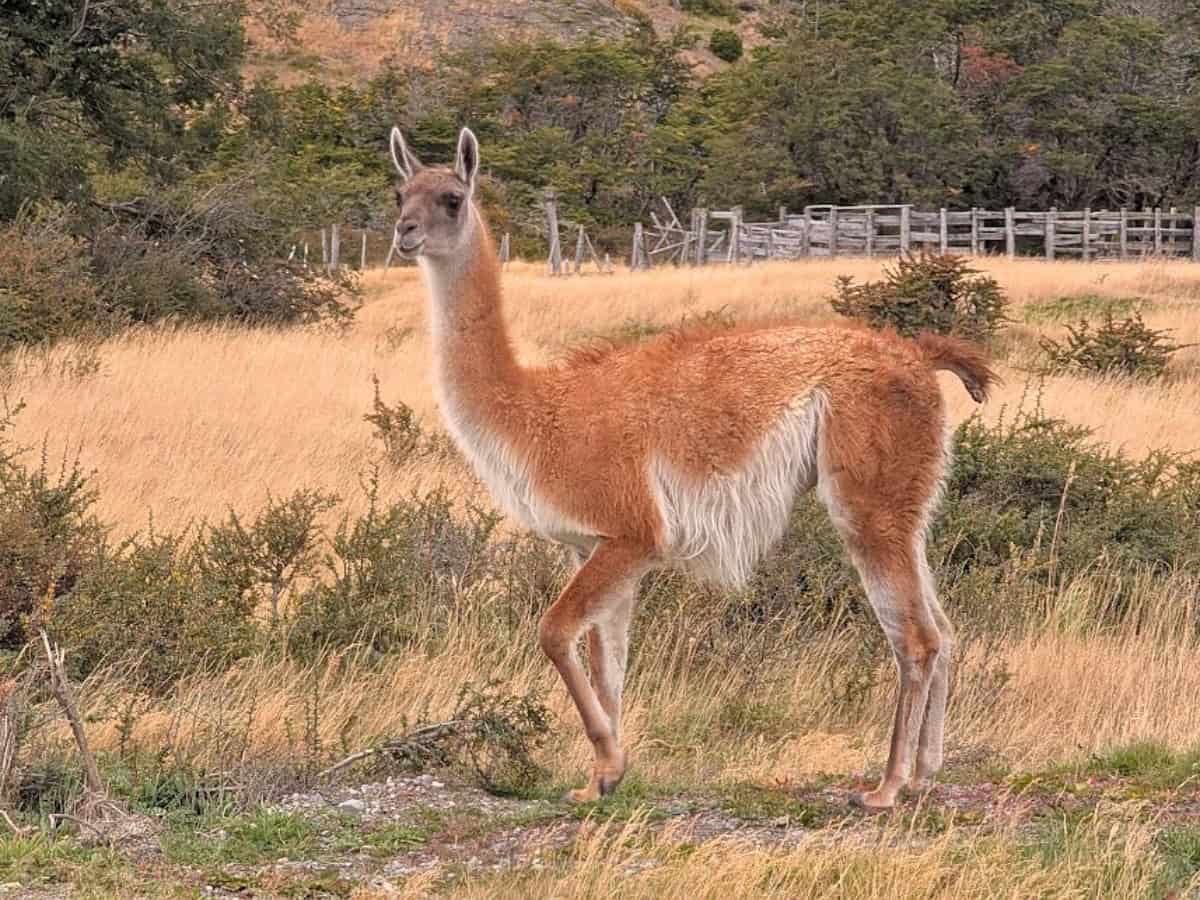
If you spend any time in Torres del Paine, you will see a guanaco. If you don’t, you aren’t looking.
These animals are wild relatives of the llama, and they roam freely in huge herds across the golden pampas. For thousands of years, the indigenous Aonikenk people relied heavily on the guanaco for food, clothing, and shelter, making them a cornerstone of the region’s cultural history.
They have long, elegant necks and beautiful reddish-brown coats with white underbellies. You usually spot them grazing on open plains or standing guard on small hills, watching for predators.
They are incredibly photogenic and often just stand there watching you as you snap photos. My coolest spotting was a small herd as they crossed the highway and jumped neatly over the fencing on either side.
The Elusive Puma
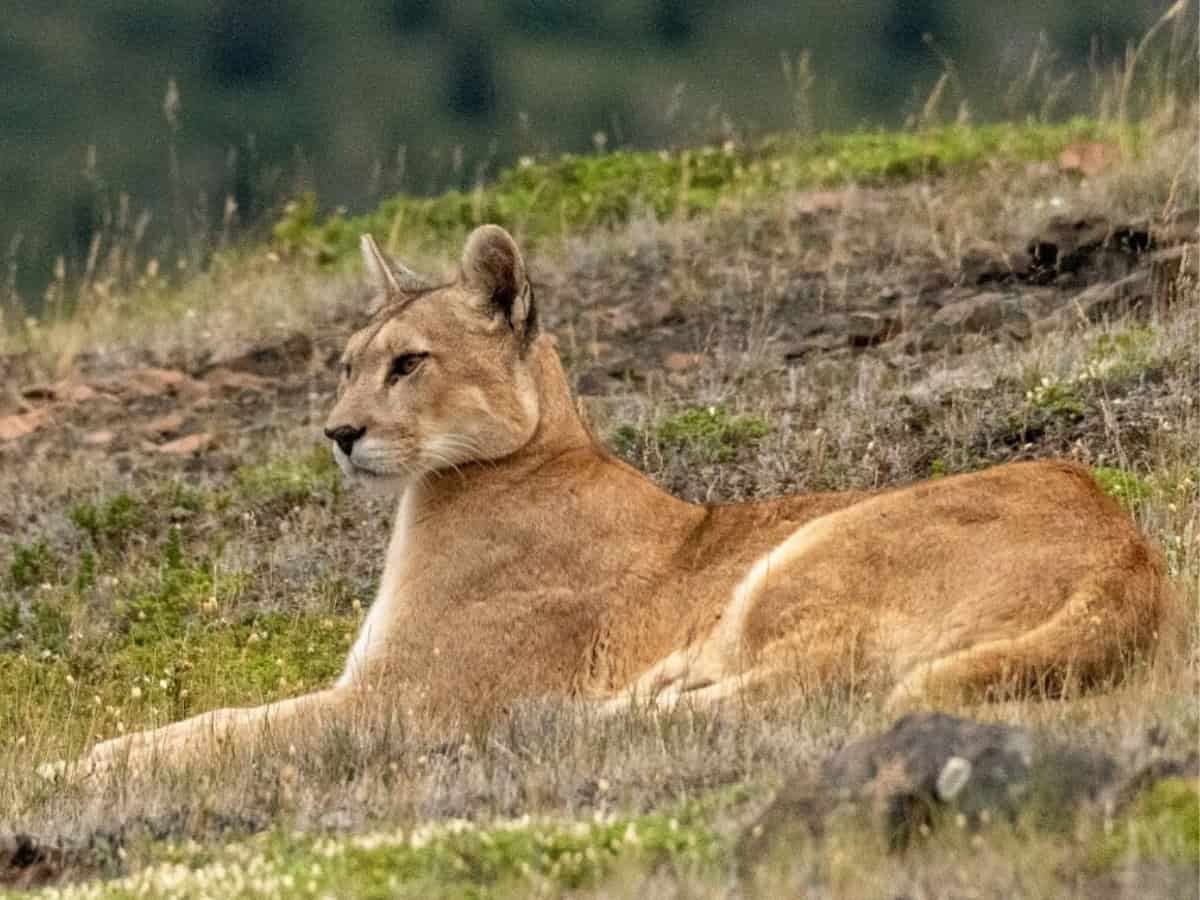
The puma is the apex predator of the Patagonian ecosystem, and it’s one of the animals I desperately wanted to see but unfortunately missed (just like in the Amazon!). I did hear that there was a mama puma with two cubs who hung out near the hotel last spring, but they never appeared for me.
In local Andean mythology, the puma is deeply revered and represents the world of the living, embodying strength, patience, and intelligence. They are stealthy mountain lions that blend perfectly into the rocky, golden landscape.
The best time to spot a puma is at dawn or dusk when they are actively hunting guanacos, but it requires a lot of patience, a sharp eye, and usually a bit of luck. Even if you don’t see one, just knowing these giant cats are roaming the hills around you adds a thrilling layer of adventure to your hikes.
And yes, you’ll see signs warning you about pumas as you hike, along with reminders of what to do and what not to do if you see one. The big thing is not to turn your back on them, but don’t let this frighten you from hiking on the established paths within the Torres del Paine National Park.
The Soaring Andean Condor
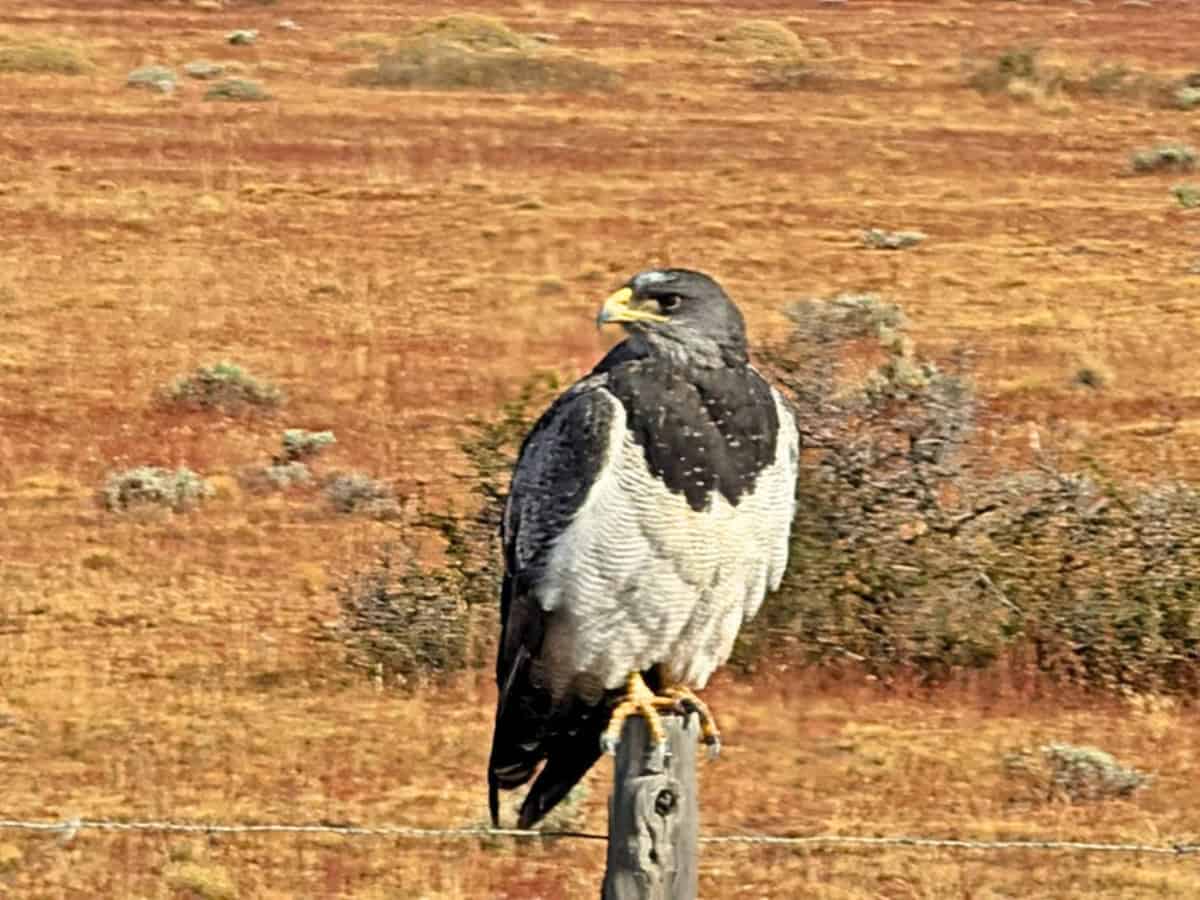
The Andean condor is a true symbol of the mountains, and you will definitely want to look up to spot one. We saw them frequently as we hiked and rode horseback across the country, and they also hung out on fences during another van excursion.
They hold deep cultural significance across South America, often representing the heavens and spiritual communication in indigenous traditions. They are one of the largest flying birds in the world, and they boast an enormous wingspan that can reach up to ten feet.
Because they are scavengers, they spend their days riding the thermal currents high above the mountain passes looking for meals. They look majestic as they soar over the granite peaks, and watching them glide effortlessly without ever flapping their wings is a mesmerizing sight.
The Speedy Nandu
The nandu, also known as Darwin’s rhea, looks exactly like a small ostrich. I saw a few of them on my way to the hotel, which again, had I known to ask my shuttle driver to stop so we could watch them for longer, I would have.
Sadly, those were the only ones I saw during my entire trip, as you don’t see them within the reserve itself. I kept my eyes peeled on my way back to the airport, but I never saw another one.
Charles Darwin spent a great deal of time searching for this bird during his voyages, which is why it bears his name today. These large, flightless birds are perfectly adapted to life on the Patagonian steppes.
They have long, powerful legs that allow them to run extremely quickly across the plains to escape predators like the puma I never spotted. You typically see them traveling in small groups, and they blend surprisingly well into the tall grasses until they suddenly take off running.
The Endangered Huemul
The huemul is a South Andean deer that rounds out the Patagonian Big Five, and it’s another beautiful creature I never managed to spot. They are highly endangered, so seeing one in the wild is a very special treat.
The huemeul hold great importance in the country and are even featured on Chile’s national coat of arms alongside the condor. They tend to hide out in the dense forests and steep rocky terrain, so you have to pay close attention to catch a glimpse of their stocky bodies and thick brown coats.
The Vibrant Chilean Flamingo
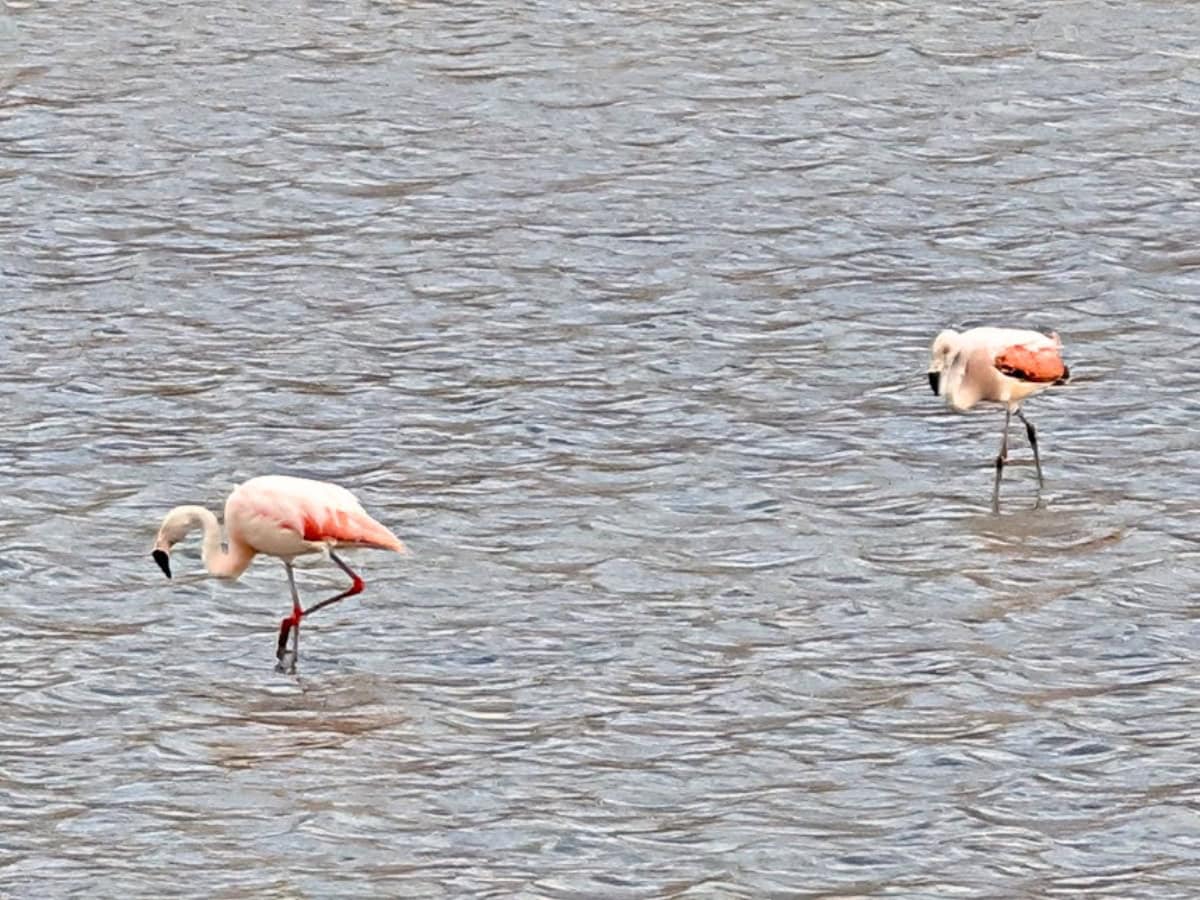
I had no idea Patagonia had flamingos until I saw them with my own eyes. It is so surprising to see bright pink tropical-looking birds in such a rugged, chilly environment when I’m used to seeing them in Florida and other Caribbean destinations.
We spotted them wading in the shallow, salty lagoons during our van trip to see the glacier, yet another reason to book that excursion. The coolest part was watching how they actually move their feet like flamenco dancers to stir up the water, agitate the mud, and release the tiny shrimp from the bottom to eat.
I had no idea they do that, as I’ve only seen them in captivity before, where they have a cement bottom to the pond and are fed shrimp. This? Wayyyy cooler, and watching them feed and interact in the wild was one of the highlights of my trip.
The Elegant Black-Necked Swan
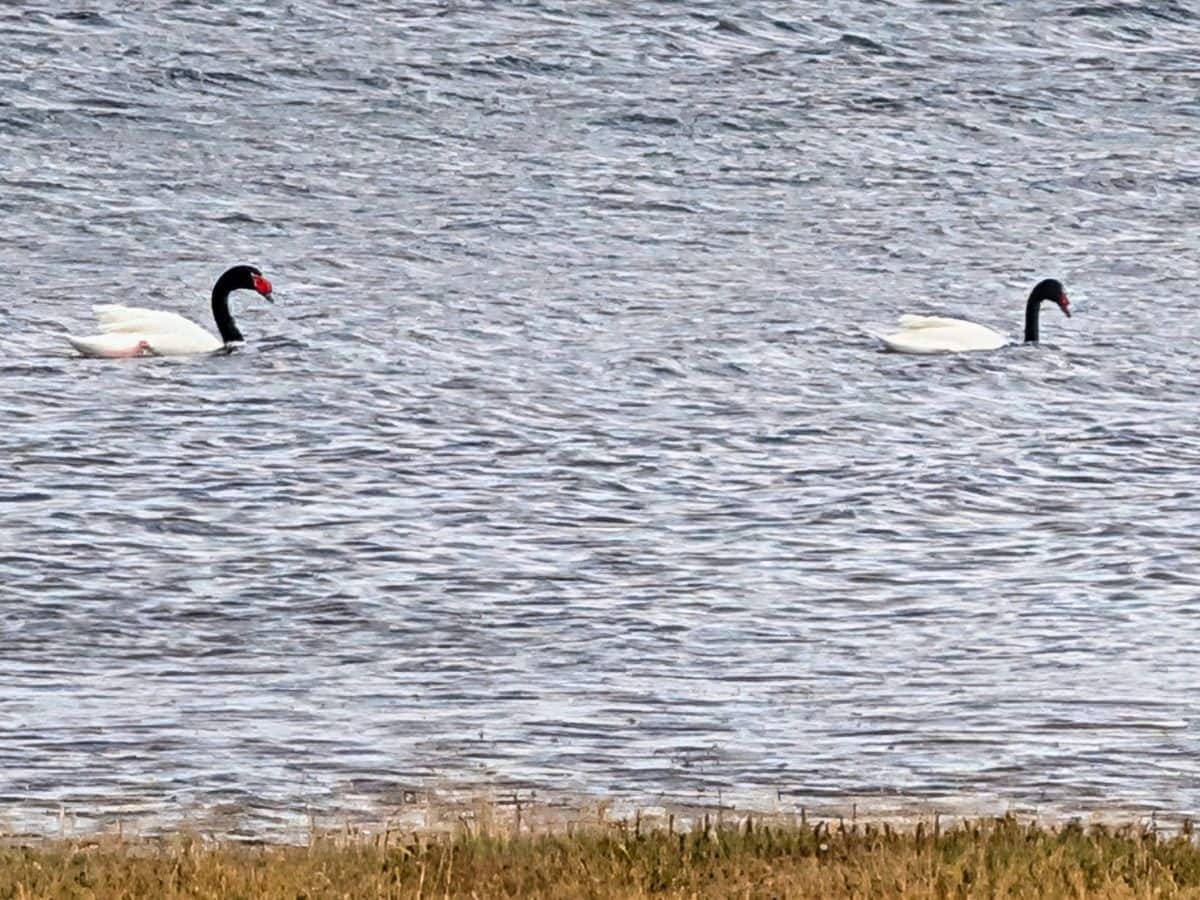
The black-necked swan is a gorgeous waterfowl that adds a touch of elegance to the Patagonian lakes. No surprise, they have pristine white bodies paired with completely black necks and heads, along with a very distinct bright red knob at the base of their bills.
They are the largest waterfowl native to South America and incredibly dedicated parents who often carry their fluffy gray cygnets on their backs while swimming. You usually find them floating peacefully in the deeper lakes and lagoons around the reserve.
The Diving Great Grebe
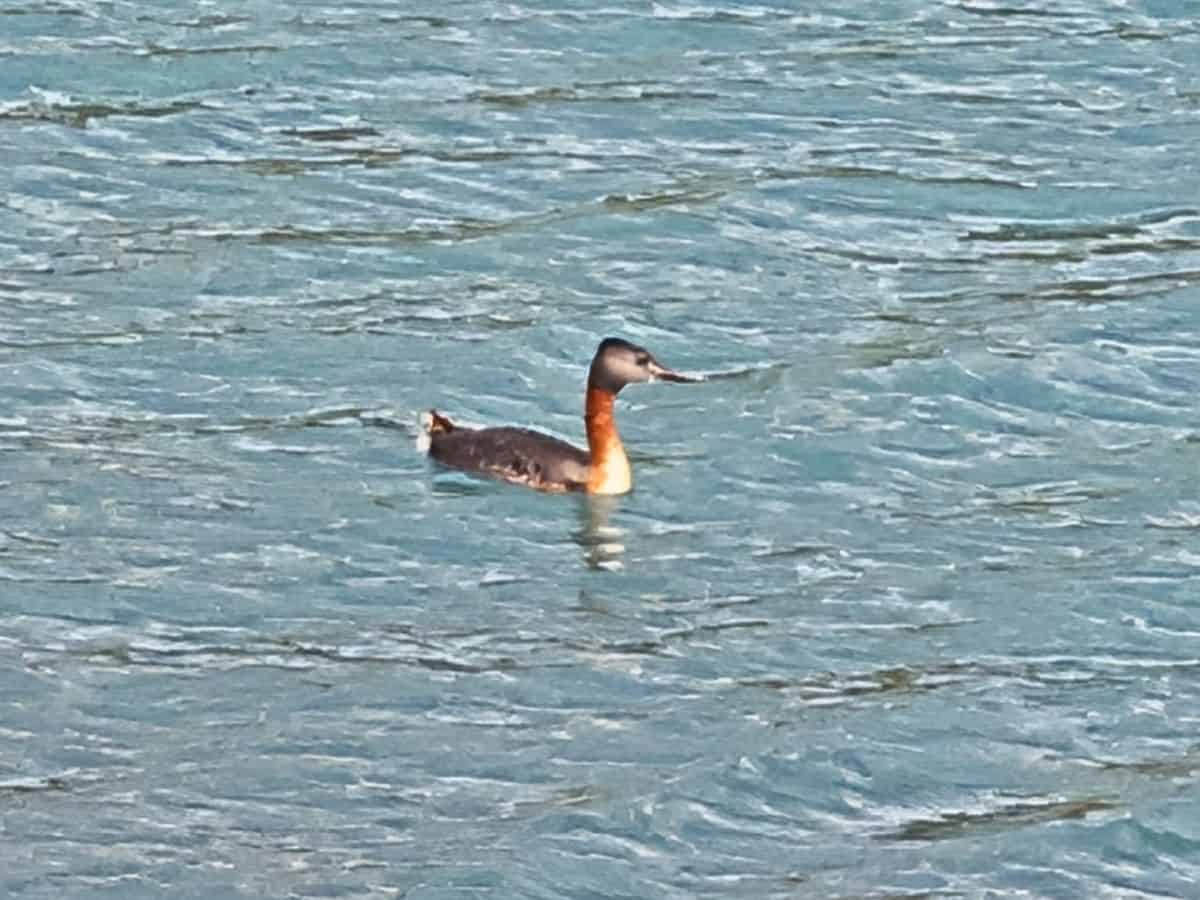
Alongside the swans, you are also likely to spot the distinctive great grebe swimming in the lakes. The region is home to several unique waterfowl species that I hadn’t known existed before I visited.
These birds are phenomenal divers. You’ll see them paddling around the lagoons, diving deep beneath the surface to hunt for fish and small aquatic invertebrates, much like the loons I grew up with in Minnesota.
They have beautiful reddish plumage on their necks and a very sleek profile, making them a fun find for bird watchers as you explore the water. I find their relatively sharp beaks interesting for a water bird, as it gives them a different look from most.
The Loud Austral Parakeet
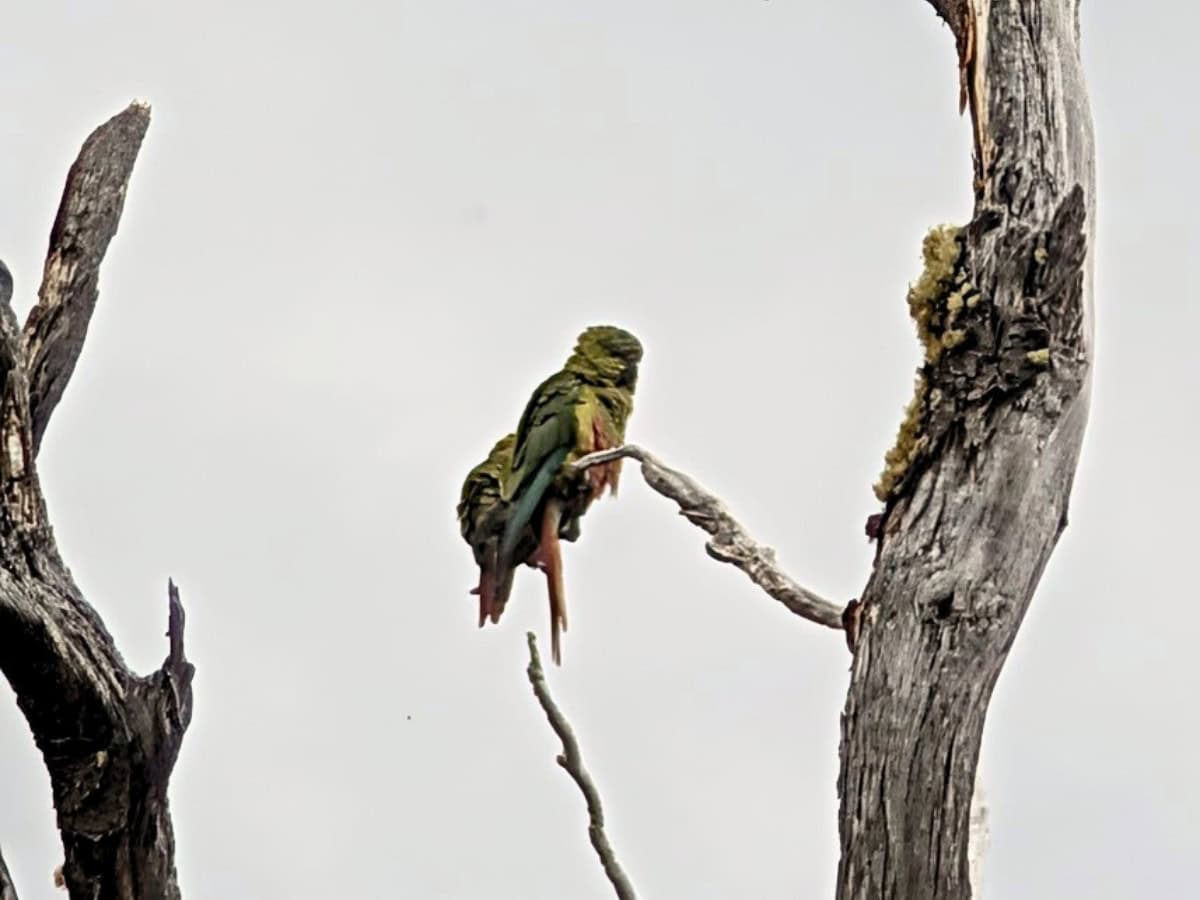
Finding a parakeet in the freezing Patagonian wind feels just as surprising as finding a flamingo. The Austral parakeet is the most southerly parrot species in the world, and it has perfectly adapted to survive cold, snowy winters.
We spotted a whole flock of them in the trees just outside the boat’s departure point on Grey Lake, where we went to see the glacier fields. It’s a good lesson to always look up, down, and around, since you never know what you’ll spot.
They have lovely emerald green feathers with hints of red, and you usually hear them before you see them. They travel in loud, chatty flocks through the dense forests, especially near the southern beech trees, where they love to forage for seeds, leaves, and fruits.
The Huge European Hare

When you are out exploring, you will likely see a European hare darting across the plains. They were all over the place at Hotel Las Torres, and I frequently saw them outside my window or while I was walking to or from dinner.
While they are an introduced species in the region, they are a very common sight and absolutely enormous. I was shocked by just how big these hares can get compared to the rabbits we are used to seeing back home.
Can you imagine what these guys would do to my garden, given my disagreements with the smaller ones back home? I did ask the gardeners at the hotel, and they said that the hares can jump over their fences and definitely have picnics from time to time.
The South American Gray Fox
While the puma gets all the predator glory, the South American gray fox is much easier to spot. That said, I still didn’t see any of these either.
These small, agile foxes are frequently seen trotting along the trails, darting across the dirt roads, or hunting in the tall grass. They have beautiful grayish coats with reddish highlights on their legs, and they are incredibly curious creatures.
You often see them out during the day looking for small rodents, birds, and insects to eat. I spent much of my time exploring on horseback, and they’re less likely to stick around when they hear and smell horses compared to when you’re hiking in small groups.
Appreciating The Wild Beauty Of Patagonia
Visiting the edge of the world is about so much more than just hiking the famous trails and staring at the mountains. The wildlife in Torres del Paine brings the entire landscape to life in a way that truly humbles you.
Do what you can to spot a flamingo dancing in a lagoon, listen to parakeets in the forest, or just admire a guanaco on the horizon. The animals make the long journey worth it.
Just remember to keep your eyes open, ask your driver to pull over when you see something amazing, and always respect the incredible wild creatures that call this region home. Get to planning that trip!